"Deniz yosunu nedir" diye arama yapıyorsanız, muhtemelen bu ham maddenin geliştirdiğiniz bir ürüne veya formülasyona uyup uymadığını ve daha ileri gitmeden önce bir tedarikçiye ne sormanız gerektiğini bulmaya çalışıyorsunuzdur. Kısaca deniz algleri deniz ortamlarında yaşayan fotosentetik organizmalardır. Bunlar iki geniş gruba ayrılır: çoğu insanın hayal ettiği deniz yosunu olan makroalgler ve fitoplankton içeren ve mikroskop olmadan görülemeyecek kadar küçük olan mikroalgler. Endüstriyel alıcılar, zaman içinde güvenilir bir şekilde belirleyebilecekleri, test edebilecekleri ve tedarik edebilecekleri bir girdiye ihtiyaç duyduklarında bunları hammadde olarak temin ederler.
Bu kılavuz temel bilgileri pratik bir sırayla ele almaktadır. Deniz yosunlarının nasıl sınıflandırıldığı ve "deniz yosunu" ile "mikroalg" gibi yaygın terimlerin nerede karıştırıldığıyla başlıyoruz. Daha sonra, endüstriyel alıcıların algleri neden bir girdi olarak değerlendirdiklerine ve bunların ağırlıklandırdığı ödünlere, özellikle de doğal değişkenliğe karşı sabit spesifikasyonlara bakıyoruz. Daha sonra size satın alma ve Ar-Ge ekipleri için bir spesifikasyon ve kaynak bulma kontrol listesi veriyoruz ve alıcıların sıklıkla sorduğu ve kanıtların hala zayıf olduğu sorularla bitiriyoruz.
Deniz yosunları nelerdir: sınıflandırma ve ana gruplar
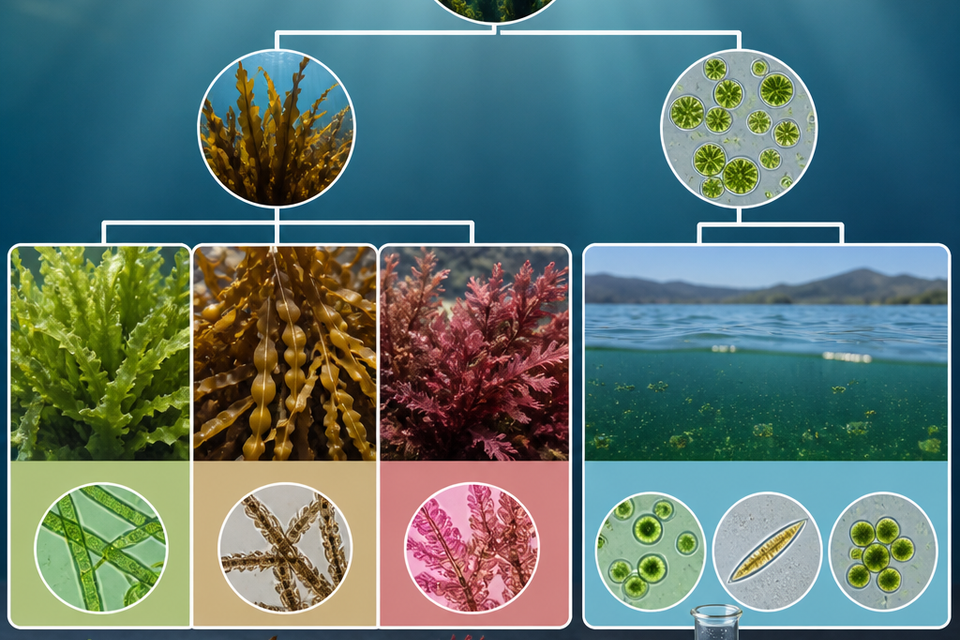
Deniz yosunu tek bir aile değil, işlevsel bir gruptur. Ana gruplar esas olarak rengi, habitat derinliğini ve aşağıdaki bölümlerde ele alınan endüstriyel kullanımları (gıda, hidrokolloidler, yem, biyoyakıt hammaddesi) belirleyen pigment ile ayırt edilir.
Deniz yosunları deniz suyunda yetişen fotosentetik organizmalardır. İki pratik gruba ayrılırlar: makroalglergörebileceğiniz deniz yosunları ve mikroalgfitoplanktonu içerir ve genellikle mikroskop olmadan görülemez. Bir alıcı için grup, ham maddeye, tedarik rotasına ve yazdığınız spesifikasyona karar verir.
Şartlarla başlayın
Karışıklığın çoğu örtüşen üç kelimeden kaynaklanır:
- Deniz yosunu tuzlu suda yaşayan algler için kullanılan genel terimdir.
- Deniz yosunu makroalglerin günlük adıdır. Deniz yosunu ayrı bir kategori değil, bir tür yosundur.
- Mikroalgler tek hücreli veya küçük koloni organizmalarıdır. Fitoplankton, su sütununda sürüklenen mikroalglerdir.
Bir tedarikçi "deniz yosunu" derse hangi grubu kastettiğini sorun. "Deniz yosunu özü" yazan bir spesifikasyon ve "mikroalg biyokütlesi" yazan bir spesifikasyon, farklı kaynak ve işleme yollarıyla farklı malzemeleri tanımlamaktadır.
Makroalgler: kahverengi, kırmızı ve yeşil
Makroalgler pigment ve hücre yapısına göre sınıflandırılır. Üç ana grup renk, depoladıkları polisakkaritler ve büyüdükleri yer bakımından farklılık gösterir.
- Kahverengi algler (Phaeophyceae) yosun ve enkazları içerir. Renkleri klorofili maskeleyen pigmentlerden gelir. Kahverengi algler, ürünleri koyulaştıran ve stabilize eden aljinatların ana ticari kaynağıdır.
- Kırmızı algler (Rhodophyta) gibi türleri içerir Kıkırdak ve Gracilaria. Pigmentleri onlara kırmızımsı bir ton verir ve birçok derinlikte büyürler. Bunlar karragenan ve agarın olağan kaynağıdır.
- Yeşil algler (Chlorophyta) deniz marulunu (Ulva). Yeşil görünmelerini sağlayacak miktarda klorofil içerirler. Genellikle değişen koşulları tolere edebildikleri gelgit arası bölgede büyürler.
Bunlar genel farklılıklardır. Tam kompozisyon türe, mevsime ve hasat konumuna göre değişir; bu nedenle grup adlarını içerik garantisi olarak değil, spesifikasyon için bir başlangıç noktası olarak değerlendirin.
Ziyaret edin deniz yosunu ürün sayfası Bu grupların aralığımızda nasıl göründüğünü görmek için.
Mikroalg ve fitoplankton: Farklı bir üretim modeli
Mikroalgler deniz yosunundan farklı bir yol izler. Bunları kayalardan toplayamazsınız veya hat üzerinde yetiştiremezsiniz. Bunları kontrollü kültürde yetiştiriyorsunuz, sonra yoğunlaştırıp sudan ayırıyorsunuz.
Biyolojik rolü de farklıdır. Deniz mikroalgleri (fitoplankton), deniz sularındaki baskın birincil üreticilerdir. Açık okyanusta birincil üretimin tek kaynağıdırlar, bu da deniz besin ağlarının onlara bağlı olduğu anlamına gelir. Bir alıcı için bu, operasyonel gerçeklerden daha az önem taşıyor: Mikroalg rotası, hasat mevsiminde değil, tanklar, ışık, besinler ve ayırma ekipmanlarıyla çalışıyor.
Bazıları mikroalglerin daha hızlı ve kontrollü koşullarda büyüdükleri için her zaman daha iyi bir seçenek olduğunu iddia edebilir. Ancak bu avantaj ürününüze bağlıdır. Yetiştirme maliyetleri, hasat ekipmanı ve hedef bileşiklerin tümü cevabı değiştiriyor.
Spesifikasyonu yazmanın pratik bir yolu
Deniz yosunu ham maddesi için talep yazarken bu sırayı kullanın:
- Grubu adlandırın. "Kahverengi makroalg", "kırmızı makroalg", "yeşil makroalg" veya "mikroalg" yazın. Yalnızca "deniz yosunu"ndan kaçının.
- Hedef bileşiği veya fonksiyonu adlandırın. Aljinat, karragenan, protein veya pigmentin her biri farklı gruplara işaret eder.
- Kaynağı belirtin. Doğadan hasat edildiğini veya yetiştirildiğini belirtin. Bu rotalar farklı tedarik ve tutarlılık riskleri taşıyor.
- Formu ayarlayın. Taze, kurutulmuş, toz veya ekstraktın her değişiminin işlenmesi ve maliyeti.
- Gruba özel test verilerini isteyin. Genel bir "deniz yosunu" sertifikası değil, adlandırdığınız grup için bileşim verileri isteyin.
Pahalı bir karışımın bir örneği
Burada varsayımsal olarak tanımlanan yaygın bir hata var. Bir formülasyon ekibi kısaca "deniz yosunu tozu" yazıyor. Tedarikçi kahverengi bir makroalg tozu gönderiyor ancak ekibin jelleşme işlevi için kırmızı alg malzemesine ihtiyacı vardı. Daha sonra yeniden formülasyon çalışması yeniden başlar. Spesifikasyondaki bir grup adı bunu engeller.
Bütçe ve risk notları
Fiyatlandırma gruba, kaynağa ve forma göre değişir ve burada her grup için yayınlayacak güvenilir rakamlara sahip değiliz. Sayıların aynı malzemeyi karşılaştırması için belirli bir spesifikasyona göre fiyat teklifi isteyin.
Ayrıca riski de planlayın. Bazı deniz yosunu türleri toksin üretir veya balıklara zarar verir ve çoğalmaları hem yabani hasatı hem de su ürünleri yetiştiriciliğini etkileyebilir. Kaynak bulmak için tedarikçilere hasat alanlarını nasıl izlediklerini ve çiçeklenme ortaya çıktığında ne yaptıklarını sorun.
Ürününüze hangi grubun uyduğundan emin değilseniz, bizimle iletişime geçin hedef işleviniz ile spesifikasyonu daraltmanıza yardımcı olabiliriz.
Endüstriyel alıcılar neden deniz yosununu hammadde olarak kullanıyor?
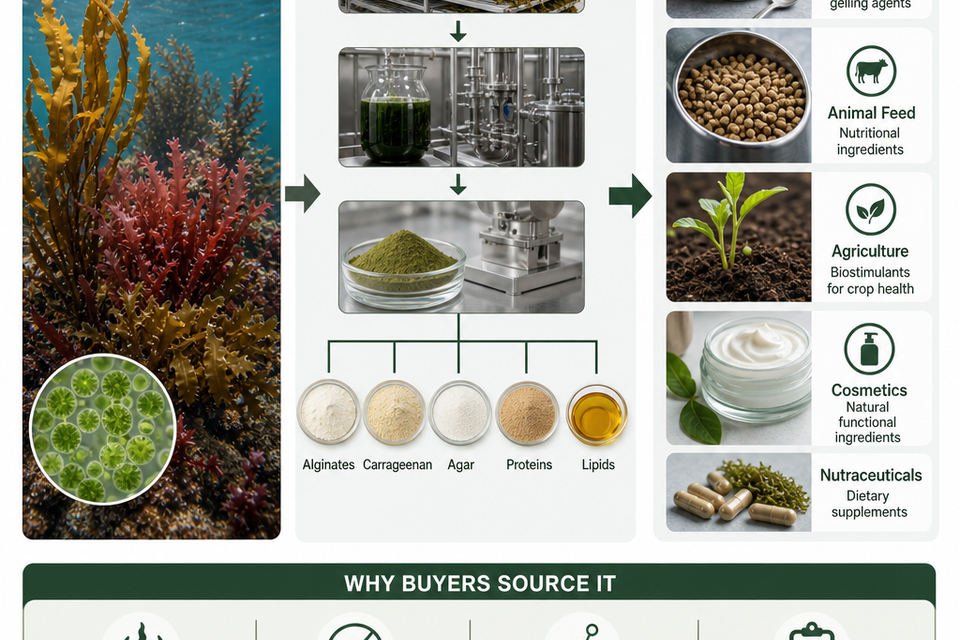
Okyanus biyokütlesinden endüstriyel içeriğe kadar: deniz yosunu B2B alıcıları için değerli hale geliyor çünkü yenilenebilir, aljinatlar, karragenan ve agar gibi tutarlı fonksiyonel bileşikler halinde işlenebilir ve birçok endüstriyel sektörde kullanılabilir.
Endüstriyel alıcılar deniz yosununu tercih ediyor çünkü deniz yosunu belirleyebilecekleri, test edebilecekleri ve yeniden sipariş edebilecekleri bir biyokütle girdisi sağlayabiliyor. Karar verici faktör alglerin genel çekiciliği değildir. Her partinin aynı yazılı spesifikasyonu karşılayıp karşılamadığıdır. Bir tedarikçi bu spesifikasyona sahip değilse, kağıt üzerinde ne kadar iyi görünürse görünsün, malzeme sürecinizde başarısız olacaktır.
Deniz yosunları deniz suyunda yetişen fotosentetik organizmalardır. Kaynak bulma açısından iki geniş grup önemlidir: makroalgler (kahverengi, kırmızı ve yeşil türleri dahil deniz yosunları) ve mikroalg (fitoplankton). Dalcon Environmental, deniz mikroalglerinin deniz sularındaki baskın birincil üreticiler olduğunu ve deniz balıkçılığının bunlara bağlı olduğunu belirtiyor. Ancak bir alıcı için daha faydalı olan ayrım, her grubun nasıl yetiştirildiği ve hasat edildiğidir.
Alıcıların algleri girdi olarak değerlendirdiği yer
Alıcılar genellikle algleri küçük bir kullanım grubu için test ediyor: gıda ve yem bileşenleri, kişisel bakım formülasyonları, tarım ve su ürünleri yetiştiriciliği girdileri ve henüz geliştirilme aşamasında olan malzemeler. Her kullanım, nem, parçacık boyutu, renk, mikrobiyal limitler, kirletici limitler ve dokümantasyon gibi kendi spesifikasyonlarını belirler.
Bu özellikler farklı olduğundan, bir kullanıma uygun olan malzeme diğerinde başarısız olabilir. Numune istemeden önce kullanıma isim vererek ve sınırlarını yazarak başlayın.
Üç satın alma sürücüsü
Alıcılar genellikle kaynak bulma nedenlerini üç soruya indirgerler:
- Tutarlılık: Tedarikçi lot 1 ve lot 20'de aynı spesifikasyonu yakalayabilir mi? Her parametre için test yöntemlerini ve kabul aralığını sorun.
- Tedarik sürekliliği: Tedarikçi her üç ayda bir aynı hacmi teslim edebilir mi? Biyokütlenin nereden geldiğini, hasat zamanlamasının nasıl ayarlandığını ve hangi yedek kaynağın mevcut olduğunu sorun.
- Formülasyon uyumu: Malzeme mevcut prosesinizde karıştırma, kurutma veya dozajı değiştirmeden çalışıyor mu? Bir tarifi değiştirmeden önce numuneler ve bir tezgah denemesi isteyin.
Bu sorular belirsiz bir fayda talebini kontrol edebileceğiniz bir şeye dönüştürür. Üçüne de verilerle yanıt veren bir tedarikçinin hak kazanması, pazarlama diliyle yanıt veren bir tedarikçiden daha kolaydır.
Değişkenlik takası
Algler yaşayan bir girdidir. Mevsim, su sıcaklığı, besin seviyeleri ve hasat zamanlaması bileşimi değiştirir. Aynı türler bir hasat döneminden diğerine farklılık gösterebilir.
Yetiştirme modeli, kontrol ve maliyet arasındaki dengeyi belirler. Kontrollü sistemlerde yetiştirilen mikroalgler, spesifikasyonların sıkılaştırılması için daha fazla alan sağlar. Açık sulardan toplanan makroalgler daha fazla doğal çeşitliliği kabul eder. Bir model seçmeden önce hasat maliyetini, büyüme süresini karşılaştırın
Tedarik ve Ar-Ge ekipleri için spesifikasyon ve kaynak bulma kontrol listesi
Kullanılabilir bir spesifikasyon, alg grubunu, türünü, hasat yöntemini, formunu ve izlenebilirliğini adlandırır ve ardından her birinin kanıtlanması için parti düzeyinde belgeler gerektirir. Fiyat teklifi istemeden veya formülasyon denemelerini çalıştırmadan önce bu alanları yazın. Bunlar olmadan Ar-Ge bir malzemeyi test eder ve tedarik başka bir malzemeyi satın alır.
Spesifikasyonun neden önce gelmesi gerekiyor?
Most sourcing problems start with vague words like "seaweed extract" or "marine algae powder." Those words cover brown, red, and green macroalgae and microalgae, which differ in structure, composition, and processing. A sample from one group does not predict the performance of another.
Write the spec before the supplier conversation. It gives both teams one shared definition, and it lets you compare quotes on the same basis.
The specification template
Use this table as a starting point. Fill every row, or mark it as an open question to resolve with the supplier.
| Field | What to write | Neden önemli? |
| Yosun grubu | Brown, red, green, or microalgae/phytoplankton | Group drives the end use and the processing route |
| Species or genus | Scientific name, if known | Prevents substitution between look-alike materials |
| Harvest method | Wild harvest, cultivated, or other method the supplier uses | Affects consistency, traceability, and supply continuity |
| Form | Fresh, dried, powder, or extract | Changes handling, storage, dosing, and shelf life |
| Hasat yeri ve mevsimi | Region and harvest window | Composition can shift with environment and season |
| Traceability | Lot numbering and the link from lot to harvest record | Lets you trace a problem back to its source |
| Acceptance range | A min-max range for key attributes your team sets | Turns "good enough" into a checkable test |
| Yield basis | How the supplier calculates yield, and the moisture or dry-weight basis | Prevents comparing quotes that use different bases |
| Lead time | Order-to-delivery time, stated by the supplier | Sets the minimum stock buffer you need |
Specify ranges, not single values. A single target value makes normal lot variation look like a failure.
Questions to ask suppliers
Send these questions in writing. Written answers give you a record to compare later.
- Where is the material harvested, and can you name the region?
- In which months is it harvested, and how do you handle off-season supply?
- What harvest method do you use, and how does it change between lots?
- Can you link each lot number to its harvest record?
- Which lot-level documents do you issue with each shipment?
- What yield figure do you quote, and on what moisture or dry-weight basis?
- What is your standard lead time, and what causes it to slip?
Some suppliers will answer all seven clearly. Others will not. A vague answer to questions 4 and 5 is a warning sign on its own.
Documents to request
Ask every supplier for the documents that cover your specification. Confirm with your regulatory team which standards apply in your target market before you accept any document as sufficient. Common requests include:
- Certificate of analysis for each lot, with results against your acceptance ranges
- Lot traceability record linking the lot to harvest location, date, and method
- Species confirmation or identification record for the material
- Processing record for dried, powdered, or extracted forms
Do not treat a document as proof of quality until your team has checked that it covers the attributes in your spec.
A practical example
Suppose R&D validates a formulation using a sample from one harvest window. Procurement then buys a production lot from a different season, and the lot's composition falls outside the range R&D tested.
The spec would have caught this if it had included a harvest season field and an acceptance range. The fix is simple: require at least three consecutive production lots to fall within your acceptance range before you lock the spec. If lot-to-lot variation exceeds your range, re-test the formulation or tighten the spec before you commit volume.
Some teams argue that a broad spec gives them more supplier options. That holds only for early trials. For production, a broad spec shifts risk onto your formulation, so narrow the spec once trials show which attributes matter.
Budget and implementation risks
Budget context is unclear until you have real quotes. Do not estimate costs from general assumptions. Request quotes against the same spec, with the same yield basis and lead time, so you can compare them directly.
Watch for these implementation risks:
- Species drift: the supplier changes source or species without notice.
- Seasonal gaps: the material is unavailable in certain months, which forces an unplanned switch.
- Documentation gaps: lots ship without the records your spec requires.
- Re-qualification time: a supplier or source change can force new R&D trials, which add time before production.
Build a re-qualification step into your supplier change process. Treat any change in source, species, or form as a new spec event.
Next steps
Start with the deniz yosunu ürün sayfası to see which forms and groups are covered. Then use the bize ulaşın sayfası to send your completed template for a specification review. If you are still defining a new input, the new raw material development page and the hakkımızda sayfası explain how the team works with buyers and R&D.
Common buyer pain points and open questions
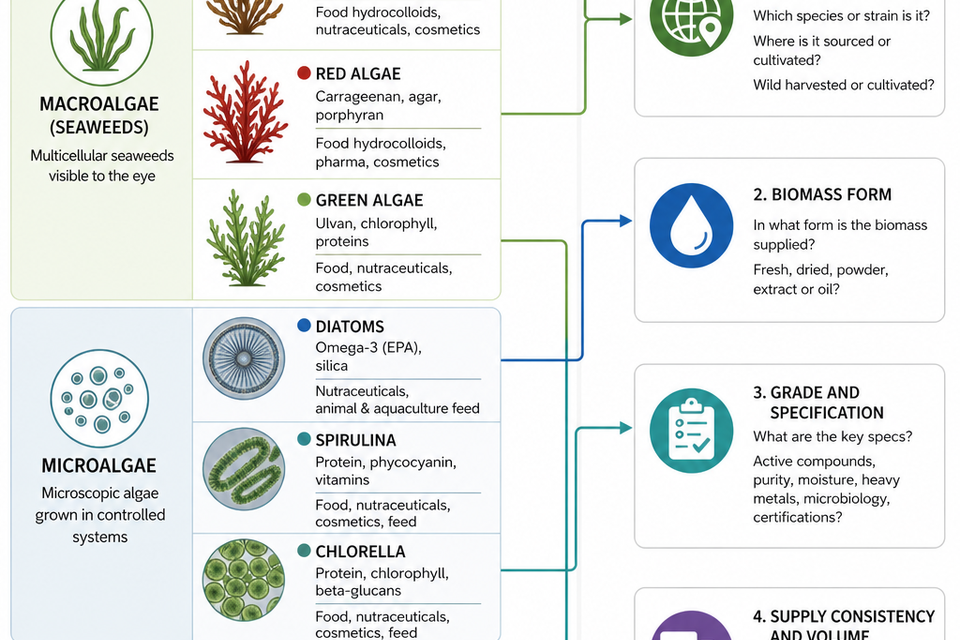
Marine algae is an umbrella term covering very different organisms with different compounds and supply chains. Before sourcing, confirm which group, species, and biomass form your application requires, since these determine specifications, pricing, and supplier fit.
Buyers most often get stuck on three things: batch-to-batch consistency, unclear origin data, and unclear cost per usable unit. You can check all three before you commit to a trial.
Editor note: No forum threads or community discussions were supplied for this section, so the pain points below are framed as common buyer questions. Each needs a cited source before publication.
Pain point 1: One batch performs differently from the next
Marine algae are biological materials. Composition shifts with species, harvest timing, and water conditions. A strong sample tells you little about the lot that arrives six months later.
Ask for a lot-level certificate of analysis with every shipment. Compare at least three consecutive lots before you scale up.
Pain point 2: Origin data is vague
"Marine algae" covers brown, red, and green macroalgae, plus microalgae (phytoplankton). These groups differ in how they grow, how they are harvested, and how long they take to reach harvest size. Wild-harvested and cultivated material can also look similar on a spec sheet.
Treat an origin question as a production-model question. Ask:
- Is the material wild-harvested or cultivated?
- If cultivated, is it open-ocean or land-based?
- Where and when was this lot harvested?
Pain point 3: Cost per usable unit is hard to compare
Quotes often list price per kilogram of wet or dried biomass. That number hides yield. If Supplier B costs 20% more per kilogram but delivers 25% more of the active material you need, B is the cheaper option.
Convert every quote to cost per kilogram of usable material. Then compare quotes on the same basis.
Pain point 4: Implementation risks get little attention
Buyers rarely ask how a supplier handles contamination or toxic blooms. For aquaculture and seafood operators, this matters because some species produce toxins or harm fish. Ask suppliers:
- Which contaminants and species do they test for?
- What happens to a lot that fails testing?
- How do they notify customers about a problem lot?
How to verify claims before a trial
- Request the species name (Latin binomial) and the lot certificate.
- Ask for harvest site, date, and production method.
- Write a spec for the properties you need and agree on test methods upfront.
- Run a small trial and keep retained samples from each lot.
- Test at least three lots before you commit to volume.
Where evidence is still thin
Published comparisons of yield, harvest cost, and scalability across production models are limited in the sources reviewed for this section. Do not treat any supplier's yield or cost claim as settled until they provide their own data. Ask for the test method behind each number.
For a broader view of the material types, visit our deniz yosunu page. If you need help matching a spec to a raw material, see our page on yeni hammadde geliştirme. For company background, read our about us page. For technical questions about your application, bizimle iletişime geçin.
Sonuç
Marine algae are a broad category, so the first step is knowing which group you're actually dealing with. Macroalgae, microalgae, and phytoplankton behave differently in cultivation, harvesting, and specification, and mixing them up is one of the fastest ways to end up with the wrong inputs. From there, most sourcing decisions come down to specifications you can verify: the algae group, form, harvest method, traceability, and lot-level documentation. Natural variability is real, so build your specs and testing plan around it rather than hoping it won't show up.
If you're at the stage of comparing inputs, start by writing down your specification fields using the checklist above, then review the marine algae product page to see how the options line up. If you have technical questions or want to request specifications for a trial, reach out through our contact page. You can also look at our new raw material development page if you're evaluating an input that isn't yet in your standard range.
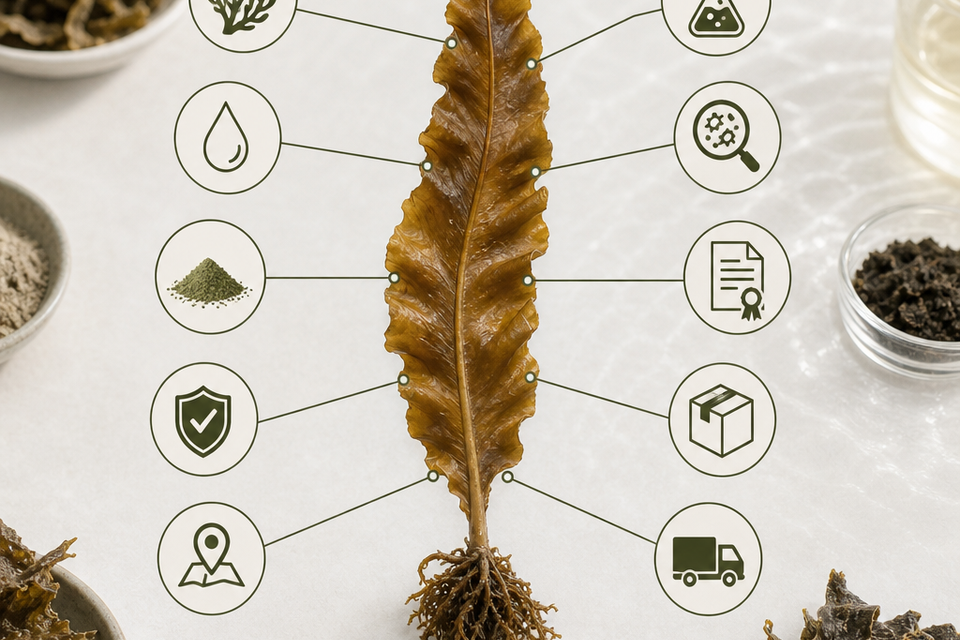
Use this checklist to define marine algae specifications before supplier qualification. Items marked as must-verify, such as species identity, contaminant limits, and Certificates of Analysis, should be confirmed in writing for every lot, because differences in form, origin, or processing can change both functional performance and regulatory compliance.