جيڪڏهن توهان ڳولهي رهيا آهيو ته "سمندري الجي ڇا آهي"، توهان شايد اهو ڪم ڪرڻ جي ڪوشش ڪري رهيا آهيو ته ڇا اهو خام مال هڪ پيداوار يا فارموليشن سان ٺهڪي اچي ٿو جيڪو توهان ترقي ڪري رهيا آهيو، ۽ توهان کي اڳتي وڌڻ کان پهريان ڪنهن سپلائر کان پڇڻ جي ضرورت پوندي. مختصر ۾، سامونڊي algae فوٽوسنٿيٽڪ جاندار آهن جيڪي سامونڊي ماحول ۾ رهن ٿا. اهي ٻن وسيع گروهن ۾ ورهايل آهن: macroalgae، جيڪي سامونڊي ويڊ آهن، جيڪي اڪثر ماڻهو تصويرن ٿا، ۽ microalgae، جن ۾ phytoplankton شامل آهن ۽ خوردبيني کان سواء ڏسڻ لاء تمام ننڍا آهن. صنعتي خريد ڪندڙ انهن کي خام مال جي طور تي ذريعو بڻائيندا آهن جڏهن انهن کي هڪ ان پٽ جي ضرورت هوندي آهي ته اهي وقت جي حوالي سان معتبر طور تي وضاحت، جانچ ۽ ماخذ ڪري سگهن ٿا.
هي گائيڊ هڪ عملي ترتيب ۾ بنيادي ڳالهين کي ڍڪيندو آهي. اسان ان سان شروع ڪريون ٿا ته سامونڊي الجي ڪيئن درجه بندي ڪئي وڃي ٿي ۽ جتي عام اصطلاحن جهڙوڪ "سمنڊ" ۽ "مائڪروالگي" کي پريشان ڪيو وڃي. اڳيون، اسان ڏسون ٿا ڇو ته صنعتي خريد ڪندڙ الگا کي ان پٽ جي طور تي جائزو وٺندا آهن ۽ انهن جو وزن واپار، خاص طور تي مستحڪم وضاحتن جي مقابلي ۾ قدرتي تبديلي. پوءِ اسان توهان کي خريداري ۽ آر اينڊ ڊي ٽيمن لاءِ هڪ وضاحت ۽ سورسنگ چيڪ لسٽ ڏيون ٿا، ۽ انهن سوالن سان ختم ڪريون ٿا جيڪي خريدار اڪثر اٿاريندا آهن ۽ جتي ثبوت اڃا پتلي آهي.
ڇا سامونڊي الجي آهن: درجه بندي ۽ مکيه گروپ
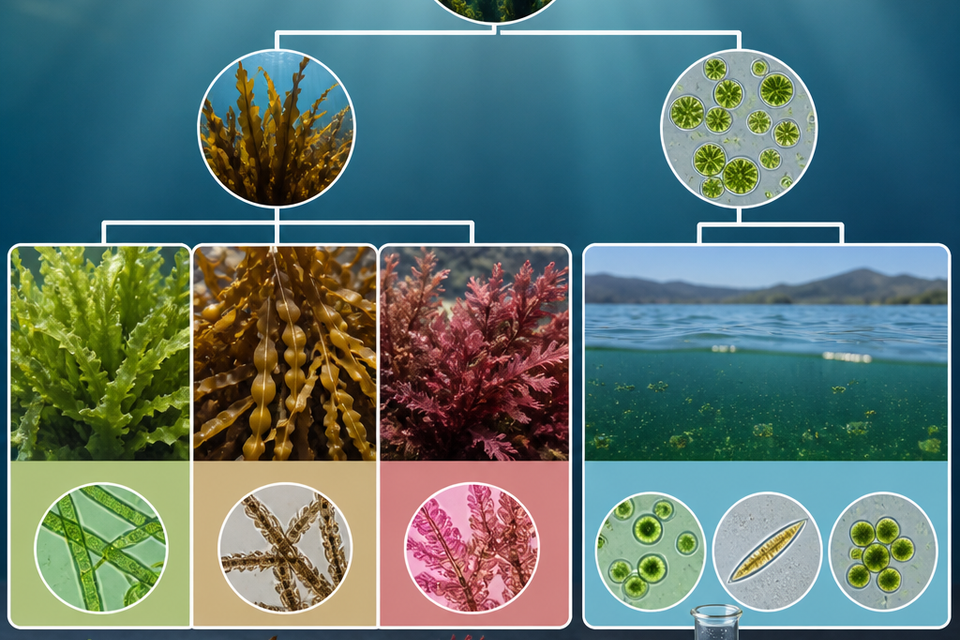
سامونڊي الجي هڪ فنڪشنل گروهه آهي، نه هڪ خاندان. مکيه گروپن کي خاص طور تي رنگن جي لحاظ کان ڌار ڪيو ويندو آهي، جيڪو رنگ، رهائش جي کوٽائي، ۽ صنعتي استعمال (کاڌو، هائيڊروڪولائيڊ، فيڊ، بايو فيول فيڊ اسٽاڪ) کي هيٺين حصن ۾ شامل ڪري ٿو.
سامونڊي الجي (Marine algae) ڦوٽو سنٿيٽڪ جاندار آھن جيڪي سمنڊ جي پاڻيءَ ۾ وڌندا آھن. اهي ٻه عملي گروپن ۾ ورهايل آهن: macroalgae, which are the seaweeds you can see, and microalgae، جنهن ۾ phytoplankton شامل آهن ۽ عام طور تي خوردبيني کان سواءِ پوشيده هوندا آهن. هڪ خريد ڪندڙ لاء، گروپ فيصلو ڪري ٿو خام مال، سپلائي رستو، ۽ چشمي جو توهان لکندا آهيو.
شرطن سان شروع ڪريو
سڀ کان وڌيڪ مونجهارو ٽن اوورليپنگ لفظن مان اچي ٿو:
- سامونڊي الجي امبرلا اصطلاح آهي algae لاءِ جيڪي لوڻ پاڻيءَ ۾ رهن ٿا.
- سامونڊي ڪناري macroalgae لاء روزمره جو نالو آهي. Seaweed algae جو هڪ قسم آهي، نه هڪ الڳ قسم.
- Microalgae اڪيلو سيل يا ننڍا نوآبادياتي جاندار آهن. Phytoplankton microalgae آهن جيڪي پاڻيءَ جي ڪالمن ۾ وهن ٿا.
جيڪڏهن هڪ سپلائر چوي ٿو "سمندري الگا،" پڇو ته ڪهڙو گروپ انهن جو مطلب آهي. هڪ اسپيڪ جيڪو چوي ٿو "سمنڊ جو نچوڙ" ۽ هڪ چشمو جيڪو چوي ٿو "مائڪروالگي بايوماس" مختلف مواد کي بيان ڪري ٿو، مختلف سورسنگ ۽ پروسيسنگ رستن سان.
Macroalgae: ناسي، ڳاڙهو ۽ سائو
Macroalgae رنگن ۽ سيل جي جوڙجڪ جي لحاظ کان درجه بندي ڪئي وئي آهي. ٽي مکيه گروهه رنگ ۾ مختلف آهن، پوليسڪرائڊس جيڪي اهي ذخيرو ڪندا آهن، ۽ اهي ڪٿي وڌندا آهن.
- ناسي الجي (Phaeophyceae) ۾ kelp ۽ wracks شامل آهن. انهن جو رنگ رنگن مان نڪرندو آهي جيڪي ڪلوروفيل کي ڇڪيندا آهن. براون الگا alginates جو مکيه تجارتي ذريعو آهن، جيڪي مصنوعات کي ٿڌا ۽ مستحڪم ڪن ٿا.
- ڳاڙهسرو (Rhodophyta) جھڙا قسم شامل آھن چانڊوس ۽ گراسيليريا. انهن جا رنگ انهن کي ڳاڙهي رنگ ڏين ٿا، ۽ اهي گهڻيون کوٽائي ۾ وڌندا آهن. اهي ڪارگينن ۽ آگر جو معمولي ذريعو آهن.
- سائي الجي (chlorophyta) شامل آهن سامونڊي ليٽس (الوا). انهن ۾ ڪلوروفيل مقدار ۾ شامل آهن جيڪي انهن کي سائي نظر اچن ٿا. اهي اڪثر ڪري بين الاقوامي علائقي ۾ وڌندا آهن، جتي اهي بدلجندڙ حالتن کي برداشت ڪن ٿا.
اهي عام اختلاف آهن. درست ٺاھ جوڙ جنس، موسم ۽ فصل جي جڳھ سان بدلجي ٿو، تنھنڪري گروپ جي نالن کي وضاحت لاءِ شروعاتي نقطو سمجھو، مواد جي ضمانت نه.
جو دورو ڪريو سامونڊي algae پيداوار جو صفحو ڏسڻ لاءِ ته اهي گروپ اسان جي حد ۾ ڪيئن ظاهر ٿيندا آهن.
Microalgae ۽ phytoplankton: هڪ مختلف پيداوار ماڊل
Microalgae سامونڊي ويد کان مختلف رستو اختيار ڪن ٿا. توهان انهن کي پٿرن مان فصل نه ڪڍو يا انهن کي قطارن تي پوکيو. توهان انهن کي ڪنٽرول ڪلچر ۾ وڌو، پوء انهن کي پاڻي کان الڳ ۽ الڳ ڪريو.
حياتياتي ڪردار پڻ مختلف آهي. سامونڊي مائڪروالگي (phytoplankton) سامونڊي پاڻيءَ ۾ غالب پرائمري پيدا ڪندڙ آهن. کليل سمنڊ ۾، اهي بنيادي پيداوار جو واحد ذريعو آهن، جنهن جو مطلب آهي ته سامونڊي کاڌي جا جال انهن تي منحصر آهن. هڪ خريد ڪندڙ لاء، اهو معاملو آپريشنل حقيقت کان گهٽ آهي: مائڪروالگا رستو ٽينڪن، روشني، غذائي اجزاء، ۽ جداگي جي سامان تي هلندو آهي، نه فصل جي موسم تي.
ڪجھ دليل ڏئي سگھن ٿا مائڪرالگي هميشه بھتر اختيار آھن ڇو ته اھي تيز ۽ ڪنٽرول حالتن ۾ وڌندا آھن. بهرحال، اهو فائدو توهان جي پيداوار تي منحصر آهي. پوکي جي قيمت، فصل جي سامان، ۽ ٽارگيٽ مرڪب سڀ جواب تبديل ڪندا آهن.
نموني لکڻ جو هڪ عملي طريقو
هي آرڊر استعمال ڪريو جڏهن توهان هڪ درخواست لکندا آهيو هڪ سامونڊي الجي خام مال لاءِ:
- گروپ جو نالو ڏيو. لکو "نوري macroalgae،" "لال macroalgae،" "سبز macroalgae،" يا "microalgae." اڪيلو "سمندري" کان بچاء.
- ٽارگيٽ مرڪب يا فنڪشن جو نالو ڏيو. Alginate, carrageenan, پروٽين, يا pigment هر پوائنٽ مختلف گروپن ڏانهن.
- ذريعو بيان ڪريو. بيان ڪريو جهنگلي فصل يا پوکيل. اهي رستا مختلف سپلائي ۽ استحڪام جا خطرا کڻندا آهن.
- فارم مقرر ڪريو. تازو، خشڪ، پائوڊر، يا ڪڍڻ هر تبديلي جي سنڀال ۽ قيمت.
- گروپ-مخصوص ٽيسٽ ڊيٽا لاءِ پڇو. جنهن گروپ جو توهان نالو رکيو آهي ان لاءِ جامع ڊيٽا جي درخواست ڪريو، هڪ عام ”سمندري الجي“ سرٽيفڪيٽ نه.
هڪ قيمتي ميلاپ جو هڪ مثال
هتي هڪ عام غلطي آهي، بيان ڪيل هڪ فرضي طور تي. هڪ فارمولي ٽيم لکي ٿو "سمندري الجي پاؤڊر" مختصر ۾. سپلائي ڪندڙ هڪ ناسي macroalgae پائوڊر موڪلي ٿو، پر ٽيم کي هڪ gelling فنڪشن لاء هڪ لال algae مواد جي ضرورت آهي. اصلاح جو ڪم وري شروع ٿيندو. اسپيڪ ۾ هڪ گروپ جو نالو هن کي روڪي ٿو.
بجيٽ ۽ خطري جا نوٽس
قيمت گروپ، ماخذ ۽ فارم جي لحاظ کان مختلف آهي، ۽ اسان وٽ هر گروپ لاء هتي شايع ڪرڻ لاء ڪو به قابل اعتماد انگ اکر نه آهي. هڪ مخصوص اسپيڪس جي خلاف حوالن جي درخواست ڪريو، پوء انگن اکرن کي ساڳي مواد جي مقابلي ۾.
خطري لاء پڻ منصوبو. ڪجهه سامونڊي الجي نسل زهر پيدا ڪن ٿا يا مڇيءَ کي نقصان پهچائين ٿا، ۽ ڦڙا جهنگ جي فصل ۽ آبي زراعت جي پاڻيءَ کي متاثر ڪري سگهن ٿا. سورسنگ لاءِ، سپلائرز کان پڇو ته اهي فصلن جي علائقن جي نگراني ڪيئن ڪن ٿا ۽ جڏهن بلوم ظاهر ٿئي ٿو ته اهي ڇا ڪندا آهن.
جيڪڏهن توهان کي پڪ ناهي ته ڪهڙو گروپ توهان جي پيداوار کي پورو ڪري ٿو، اسان سان رابطو ڪريو توھان جي ھدف واري فنڪشن سان ۽ اسان توھان جي مدد ڪري سگھون ٿا چشمي کي تنگ ڪريو.
ڇو ته صنعتي خريدار هڪ خام مال جي طور تي سامونڊي algae جو ذريعو
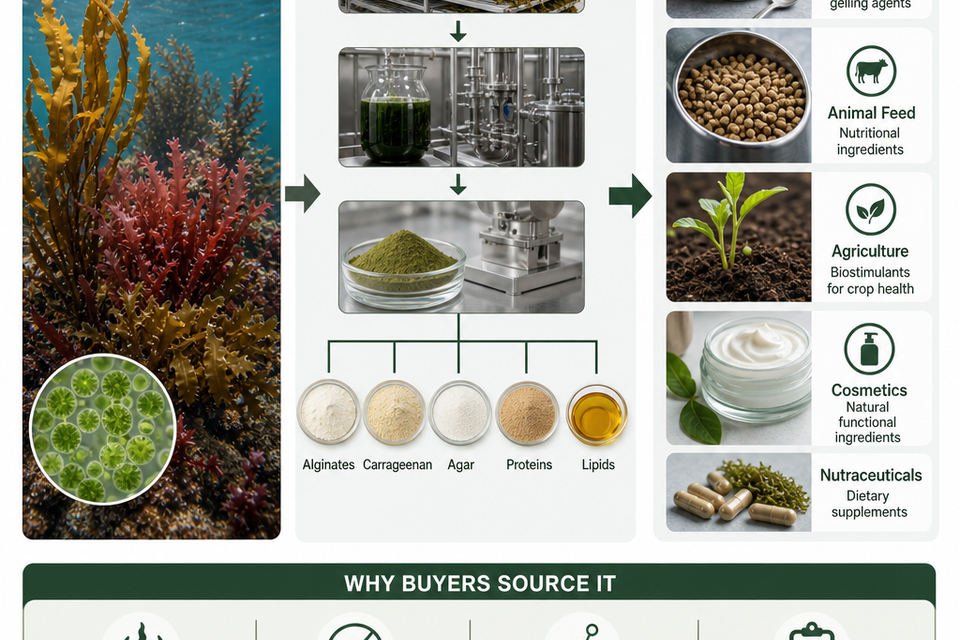
سامونڊي بايوماس کان وٺي صنعتي اجزا تائين: سامونڊي الجي B2B خريد ڪندڙن لاءِ قيمتي ٿي پوي ٿي ڇاڪاڻ ته اها قابل تجديد آهي، مسلسل ڪم ڪندڙ مرکبات جهڙوڪ alginates، carrageenan، ۽ agar، ۽ ڪيترن ئي صنعتي شعبن ۾ استعمال لائق آهي.
صنعتي خريدار ماخذ سامونڊي الجي ڇاڪاڻ ته اهو هڪ بايوماس ان پٽ فراهم ڪري سگهي ٿو جيڪي اهي وضاحت ڪري سگهن ٿا، جانچ ڪري سگهن ٿا ۽ ٻيهر ترتيب ڏئي سگهن ٿا. فيصلو ڪندڙ عنصر الگا جي عام اپيل نه آهي. اهو آهي ته ڇا هر بيچ ساڳئي لکيل وضاحتن سان ملن ٿا. جيڪڏهن هڪ سپلائر انهي چشمي کي نه ٿو رکي سگهي، مواد توهان جي عمل ۾ ناڪام ٿي ويندو، ڪابه پرواه ناهي ته اهو ڪاغذ تي ڪيترو سٺو نظر اچي ٿو.
سامونڊي الجي (Marine algae) ڦوٽو سنٿيٽڪ جاندار آھن جيڪي سمنڊ جي پاڻيءَ ۾ وڌندا آھن. سورسنگ جي مقصدن لاء، ٻه وسيع گروپن جي اهميت: macroalgae (سمنڊ جا ٻج، بشمول ناسي، ڳاڙهي ۽ سائي قسم جا) ۽ microalgae (phytoplankton). Dalcon Environmental notes that marine microalgae are the dominant primary producers in marine waters, and that marine fisheries depend on them. For a buyer, though, the more useful distinction is how each group is grown and harvested.
Where buyers evaluate algae as an input
Buyers usually test algae for a small set of uses: food and feed ingredients, personal care formulations, agricultural and aquaculture inputs, and materials still in early development. Each use sets its own specification, such as moisture, particle size, color, microbial limits, contaminant limits, and documentation.
Because these specs differ, a material that fits one use can fail another. Start by naming the use and writing down its limits before you request samples.
Three procurement drivers
Buyers typically reduce their reasons for sourcing to three questions:
- Consistency: Can the supplier hit the same spec on lot 1 and lot 20? Ask for the test methods and the acceptance range for each parameter.
- Supply continuity: Can the supplier deliver the same volume every quarter? Ask where the biomass comes from, how harvest timing is set, and what backup source exists.
- Formulation fit: Does the material run in your current process without changing mixing, drying, or dosing? Ask for samples and a bench trial before you change a recipe.
These questions turn a vague benefit claim into something you can check. A supplier that answers all three with data is easier to qualify than one that answers with marketing language.
The variability trade-off
Algae is a living input. Season, water temperature, nutrient levels, and harvest timing all change composition. The same species can differ from one harvest window to the next.
The cultivation model sets the trade-off between control and cost. Microalgae grown in controlled systems give more room to tighten specs. Macroalgae harvested from open water accept more natural variation. Before you choose a model, compare harvest cost, growth tim
Specification and sourcing checklist for procurement and R&D teams
A usable specification names the algae group, species, harvest method, form, and traceability, then requires lot-level documents to prove each one. Write these fields before you request quotes or run formulation trials. Without them, R&D tests one material and procurement buys another.
Why the spec must come first
Most sourcing problems start with vague words like "seaweed extract" or "marine algae powder." Those words cover brown, red, and green macroalgae and microalgae, which differ in structure, composition, and processing. A sample from one group does not predict the performance of another.
Write the spec before the supplier conversation. It gives both teams one shared definition, and it lets you compare quotes on the same basis.
The specification template
Use this table as a starting point. Fill every row, or mark it as an open question to resolve with the supplier.
| Field | What to write | ڇو ته اهو اهم آهي |
| الجي گروپ | Brown, red, green, or microalgae/phytoplankton | Group drives the end use and the processing route |
| Species or genus | Scientific name, if known | Prevents substitution between look-alike materials |
| Harvest method | Wild harvest, cultivated, or other method the supplier uses | Affects consistency, traceability, and supply continuity |
| Form | Fresh, dried, powder, or extract | Changes handling, storage, dosing, and shelf life |
| فصل جي جڳھ ۽ موسم | Region and harvest window | Composition can shift with environment and season |
| Traceability | Lot numbering and the link from lot to harvest record | Lets you trace a problem back to its source |
| Acceptance range | A min-max range for key attributes your team sets | Turns "good enough" into a checkable test |
| Yield basis | How the supplier calculates yield, and the moisture or dry-weight basis | Prevents comparing quotes that use different bases |
| Lead time | Order-to-delivery time, stated by the supplier | Sets the minimum stock buffer you need |
Specify ranges, not single values. A single target value makes normal lot variation look like a failure.
Questions to ask suppliers
Send these questions in writing. Written answers give you a record to compare later.
- Where is the material harvested, and can you name the region?
- In which months is it harvested, and how do you handle off-season supply?
- What harvest method do you use, and how does it change between lots?
- Can you link each lot number to its harvest record?
- Which lot-level documents do you issue with each shipment?
- What yield figure do you quote, and on what moisture or dry-weight basis?
- What is your standard lead time, and what causes it to slip?
Some suppliers will answer all seven clearly. Others will not. A vague answer to questions 4 and 5 is a warning sign on its own.
Documents to request
Ask every supplier for the documents that cover your specification. Confirm with your regulatory team which standards apply in your target market before you accept any document as sufficient. Common requests include:
- Certificate of analysis for each lot, with results against your acceptance ranges
- Lot traceability record linking the lot to harvest location, date, and method
- Species confirmation or identification record for the material
- Processing record for dried, powdered, or extracted forms
Do not treat a document as proof of quality until your team has checked that it covers the attributes in your spec.
A practical example
Suppose R&D validates a formulation using a sample from one harvest window. Procurement then buys a production lot from a different season, and the lot's composition falls outside the range R&D tested.
The spec would have caught this if it had included a harvest season field and an acceptance range. The fix is simple: require at least three consecutive production lots to fall within your acceptance range before you lock the spec. If lot-to-lot variation exceeds your range, re-test the formulation or tighten the spec before you commit volume.
Some teams argue that a broad spec gives them more supplier options. That holds only for early trials. For production, a broad spec shifts risk onto your formulation, so narrow the spec once trials show which attributes matter.
Budget and implementation risks
Budget context is unclear until you have real quotes. Do not estimate costs from general assumptions. Request quotes against the same spec, with the same yield basis and lead time, so you can compare them directly.
Watch for these implementation risks:
- Species drift: the supplier changes source or species without notice.
- Seasonal gaps: the material is unavailable in certain months, which forces an unplanned switch.
- Documentation gaps: lots ship without the records your spec requires.
- Re-qualification time: a supplier or source change can force new R&D trials, which add time before production.
Build a re-qualification step into your supplier change process. Treat any change in source, species, or form as a new spec event.
Next steps
Start with the سامونڊي algae پيداوار جو صفحو to see which forms and groups are covered. Then use the اسان سان رابطو ڪريو صفحو to send your completed template for a specification review. If you are still defining a new input, the new raw material development page and the اسان جي باري ۾ صفحو explain how the team works with buyers and R&D.
Common buyer pain points and open questions
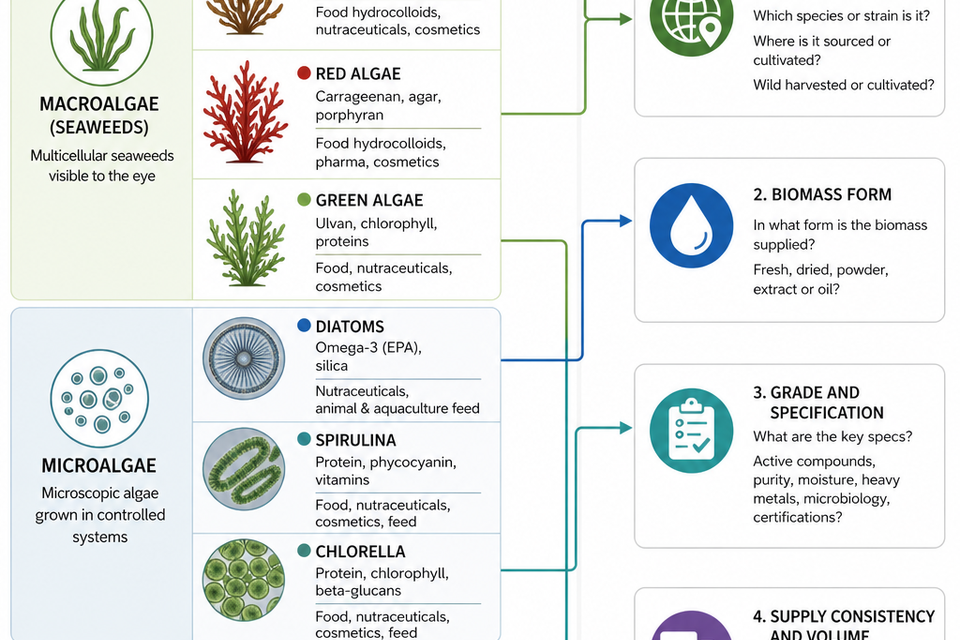
Marine algae is an umbrella term covering very different organisms with different compounds and supply chains. Before sourcing, confirm which group, species, and biomass form your application requires, since these determine specifications, pricing, and supplier fit.
Buyers most often get stuck on three things: batch-to-batch consistency, unclear origin data, and unclear cost per usable unit. You can check all three before you commit to a trial.
Editor note: No forum threads or community discussions were supplied for this section, so the pain points below are framed as common buyer questions. Each needs a cited source before publication.
Pain point 1: One batch performs differently from the next
Marine algae are biological materials. Composition shifts with species, harvest timing, and water conditions. A strong sample tells you little about the lot that arrives six months later.
Ask for a lot-level certificate of analysis with every shipment. Compare at least three consecutive lots before you scale up.
Pain point 2: Origin data is vague
"Marine algae" covers brown, red, and green macroalgae, plus microalgae (phytoplankton). These groups differ in how they grow, how they are harvested, and how long they take to reach harvest size. Wild-harvested and cultivated material can also look similar on a spec sheet.
Treat an origin question as a production-model question. Ask:
- Is the material wild-harvested or cultivated?
- If cultivated, is it open-ocean or land-based?
- Where and when was this lot harvested?
Pain point 3: Cost per usable unit is hard to compare
Quotes often list price per kilogram of wet or dried biomass. That number hides yield. If Supplier B costs 20% more per kilogram but delivers 25% more of the active material you need, B is the cheaper option.
Convert every quote to cost per kilogram of usable material. Then compare quotes on the same basis.
Pain point 4: Implementation risks get little attention
Buyers rarely ask how a supplier handles contamination or toxic blooms. For aquaculture and seafood operators, this matters because some species produce toxins or harm fish. Ask suppliers:
- Which contaminants and species do they test for?
- What happens to a lot that fails testing?
- How do they notify customers about a problem lot?
How to verify claims before a trial
- Request the species name (Latin binomial) and the lot certificate.
- Ask for harvest site, date, and production method.
- Write a spec for the properties you need and agree on test methods upfront.
- Run a small trial and keep retained samples from each lot.
- Test at least three lots before you commit to volume.
Where evidence is still thin
Published comparisons of yield, harvest cost, and scalability across production models are limited in the sources reviewed for this section. Do not treat any supplier's yield or cost claim as settled until they provide their own data. Ask for the test method behind each number.
For a broader view of the material types, visit our سامونڊي algae page. If you need help matching a spec to a raw material, see our page on نئين خام مال جي ترقي. For company background, read our about us page. For technical questions about your application, اسان سان رابطو ڪريو.
نتيجو
Marine algae are a broad category, so the first step is knowing which group you're actually dealing with. Macroalgae, microalgae, and phytoplankton behave differently in cultivation, harvesting, and specification, and mixing them up is one of the fastest ways to end up with the wrong inputs. From there, most sourcing decisions come down to specifications you can verify: the algae group, form, harvest method, traceability, and lot-level documentation. Natural variability is real, so build your specs and testing plan around it rather than hoping it won't show up.
If you're at the stage of comparing inputs, start by writing down your specification fields using the checklist above, then review the marine algae product page to see how the options line up. If you have technical questions or want to request specifications for a trial, reach out through our contact page. You can also look at our new raw material development page if you're evaluating an input that isn't yet in your standard range.
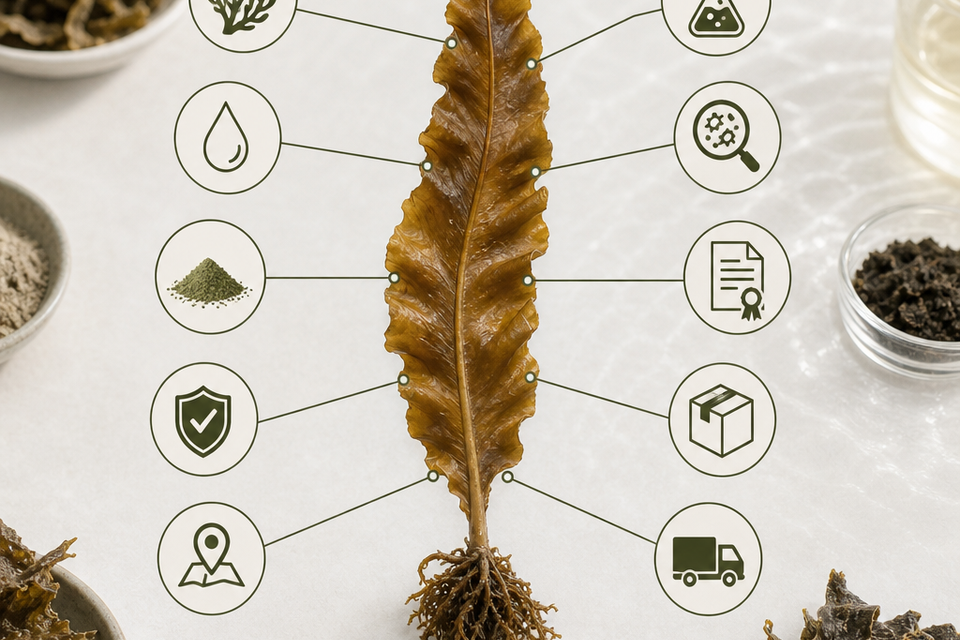
Use this checklist to define marine algae specifications before supplier qualification. Items marked as must-verify, such as species identity, contaminant limits, and Certificates of Analysis, should be confirmed in writing for every lot, because differences in form, origin, or processing can change both functional performance and regulatory compliance.