A personal care brand should tell a fragrance raw material supplier exactly where the fragrance will be used, how the finished product is applied, which scent direction is required, what formula constraints exist and which market documentation must accompany the offer. In return, the supplier should identify the proposed fragrance, its intended application fit, sample and evaluation route, available technical documents, relevant use restrictions and every deviation from the request. Without these fields, an RFQ may produce attractive prices for materials that are not technically comparable.
The phrase “fragrance for personal care” is too broad for a reliable quotation. A solid perfume, hand cream, shampoo, deodorant and rinse-off cleanser belong to different exposure and formulation contexts. Their bases can alter fragrance character, stability and release. Their regulatory and IFRA assessment routes may also differ. An RFQ must therefore begin with the finished-product use, not with a generic request for a floral or fresh scent.
Question 1: What is the exact end use?
State the finished product type and whether it is leave-on or rinse-off. Include the application area, expected frequency of use and any special user group or route of exposure that affects the project review. “Hand cream” is more useful than “skin care,” and “solid perfume applied to pulse points” is more useful than “fragrance product.” If one fragrance is intended for several formats, list each format separately so the supplier can assess them independently.
This information is necessary because the use level considered acceptable for a fragrance mixture depends on the final consumer product category and exposure scenario. IFRA Standards can prohibit, restrict or set specifications for certain fragrance ingredients, and the limits are applied according to intended use. IFRA also makes clear that its standards are an industry risk-management system and do not replace national or local regulation. A supplier’s conformity document therefore needs the correct end-use category; a certificate prepared for a different application is not a shortcut.
Application also changes formulation behaviour. A hand cream emulsion can soften top notes and make base notes more persistent. A high-wax solid perfume can suppress diffusion or change the balance observed on a blotter. Surfactants in a cleanser or shampoo can affect solubilisation, odour and deposition. Alcohol content, oils, botanical extracts, antioxidants, colourants and packaging headspace can all influence the result. The supplier cannot evaluate these interactions from a scent name alone.
Question 2: Is the request for a fragrance mixture or an aroma chemical?
Buyers searching for an “aroma chemicals and the flavor and fragrance industry supplier” may be looking for very different things. An individual aroma chemical has a defined chemical identity and becomes one building block in a perfumer’s formula. A compounded fragrance is a mixture developed to deliver an olfactory profile in consumer products. A finished perfume formula, a flavour for food use and a cosmetic fragrance are also distinct commercial and regulatory categories.
Clarify which level is required. If the buyer needs a ready-to-evaluate cosmetic fragrance mixture, the RFQ should focus on scent brief, application, compliance information and performance in the base. If the buyer needs individual materials for internal fragrance creation, the specification should instead cover chemical identity, purity, stabilisation, contaminants and lot consistency. This article addresses cosmetic fragrance mixtures for personal care; it does not imply that materials listed for fragrance use are suitable for food flavour applications.
LANDIVINE’s cosmetic fragrance raw material range provides a discovery route for personal care projects. The product listings identify fragrance concepts and verified example applications. Buyers should use those pages to create a shortlist, then confirm the technical and regulatory scope for the actual base and destination market.
Question 3: How should the scent brief be written?
A useful brief describes the desired olfactory direction without pretending that words alone can function as a specification. Give a fragrance family, the intended emotional or brand character, desired freshness or warmth, and notes that should be prominent or avoided. Explain the target consumer positioning and provide approved references only when their use is authorised. Also state whether colour, odour masking or fragrance intensity in the base creates a special challenge.
Separate “must have” requirements from preferences. A project may require a floral profile, no strong vanilla character and compatibility with a pale cream, while the exact balance of rose, peony, green and musky notes remains open for evaluation. This gives the supplier room to propose relevant options without losing the constraints that determine acceptability.
Define the evaluation sequence. First assess neat fragrance or blotters to reject clearly unsuitable directions. Next evaluate the candidates at controlled levels in the actual base. Finally assess the selected version after maturation and stability exposure in intended packaging. A blotter can reveal olfactory structure, but it cannot predict exactly how the fragrance will behave in an emulsion or wax matrix.
Question 4: Which formula constraints must be disclosed?
Provide enough information for compatibility review without disclosing unnecessary proprietary detail. The formula type, oil phase, surfactant system, solvent level, pH range, processing temperature and addition point are often more actionable than a generic “natural cream base” description. Identify ingredients with strong inherent odour, colour or reactivity. If the brand excludes specified materials or follows a retailer standard, attach the current restricted-substance criteria rather than relying on phrases such as “clean” or “non-toxic.”
Packaging belongs in the same conversation. Fragrance components may interact with plastics, elastomers, liners, coatings or adhesives. Volatile loss and headspace can change the perceived profile. A jar, stick, pump or sachet can expose the formula differently to air and light. The supplier may not be able to guarantee package compatibility, but it should be told which packaging system will be used so obvious risks and test needs can be identified.
Colour limits should be numeric or reference-based where possible. “Must not discolour” is not an acceptance criterion unless the test temperature, time, packaging and allowable change are defined. The same applies to odour stability. Agree on the control, storage conditions and assessment method before samples are judged.
Question 5: Which documents should the supplier return?
The document request should match product, market and stage of development. Common starting documents include a technical data sheet, safety data sheet, specification, certificate-of-analysis format, ingredient or allergen information needed for regulatory review, and an IFRA Certificate of Conformity for the intended application when applicable. Ask for document revision dates and the fragrance code so the paperwork can be tied to the sample and quotation.
An IFRA Certificate of Conformity deserves precise treatment. IFRA states that it does not issue these certificates itself; the supplier of the fragrance mixture is responsible for preparing the certificate for its customer. The document supports conformity with applicable IFRA Standards for identified product categories. It is not an “IFRA approval,” a finished-product safety assessment or evidence of compliance with every destination-market law.
For the EU market, fragrance allergen labelling requirements under the Cosmetics Regulation must be reviewed against the finished formula and applicable thresholds. Regulation (EU) 2023/1545 expanded the set of individually labelled fragrance allergens and introduced transition dates. A buyer should request information in a form that allows the responsible person or safety assessor to perform the current regulatory review. For other markets, specify the destination and ask which supporting information is available; do not assume an EU-focused package answers every jurisdiction.
The certificate of analysis should reflect agreed release controls rather than copy marketing descriptions. Relevant fields vary by product, but identity, appearance, odour and appropriate physicochemical limits are typical discussion points. Ask how lot consistency is assessed and how specification or composition changes are communicated. If the sample, document and quotation use different codes or revisions, resolve the mismatch before approval.
Question 6: How will samples be compared?
A disciplined sample plan saves more time than requesting many unstructured options. Ask for a small, relevant set tied to the brief. Assign each sample a blind internal code if brand or price bias could affect panel feedback. Evaluate all candidates in the same base, at the same addition level and with the same process. Record the fragrance lot, formula batch, addition temperature and maturation time.
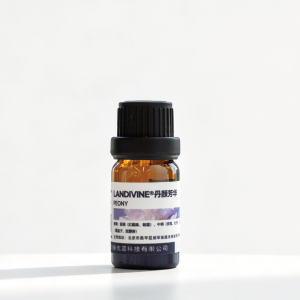
The LANDIVINE portfolio illustrates how a shortlist can begin with olfactory direction and verified application. LANDIVINE® PEONY cosmetic fragrance raw material is described as a floral-fruity composition for solid perfume and hand cream, with rose-petal delicacy and a musk-soft warmth. Other listed directions include the neroli-citrus and white-floral character of ORANGE BLOSSOM, the rose-and-peony profile of MORNING ROSE, and the green, tuberose and camellia direction of BLOOMING. These descriptions guide sampling; they do not replace evaluation in the buyer’s formula.
Score the attributes that matter to the project: initial impression, character in the base, intensity, balance, masking effect, colour change, odour after accelerated exposure and consistency across evaluators. Avoid treating panel preference as the only result. A candidate may be liked on a blotter but fail colour or stability requirements, while a technically robust option may need olfactory adjustment.
Make supplier quotations technically comparable
The RFQ should separate technical acceptance from commercial comparison. The buyer provides the application and constraints; the supplier returns the proposed fragrance code, sample identity, relevant document set, application category, recommended evaluation range where supportable, package size options, commercial terms and declared deviations. If a quoted product is an alternative rather than the sampled material, that difference must be explicit.
| RFQ field | Buyer provides | Supplier confirms |
| End use | Product type, leave-on/rinse-off, application area and markets | Proposed fragrance and relevant application classification |
| Olfactory brief | Fragrance family, desired character, notes to include or avoid | Candidate code, scent direction and sample availability |
| Formula conditions | Base type, pH, process heat, addition point and constraints | Known handling guidance, limitations and test recommendations |
| Documentation | Target-market and customer-standard requirements | Available TDS, SDS, specification, CoA format, IFRA and allergen information |
| Sample review | Base, test levels, packaging and acceptance method | Sample code, lot, document revision and any evaluation dependencies |
| Commercial scope | Forecast quantity, requested delivery basis and timing | Quoted pack, quantity basis, lead-time basis, options and deviations |
Do not compare unit prices until the product code, concentration basis, pack size, documentation and delivery scope are aligned. A lower price can reflect a different fragrance, a different service scope or an incomplete document package. The quotation should show what is included and identify items that depend on sample approval, forecast volume or further regulatory review.
Frequently asked RFQ questions
Does an IFRA certificate mean a fragrance is legally approved everywhere?
No. It documents conformity with applicable IFRA Standards for stated end-use categories and is prepared by the fragrance mixture supplier. Market-specific cosmetic regulation, finished-product safety assessment, labelling and claims still require separate review.
Can one fragrance sample be approved for both hand cream and solid perfume?
It can be evaluated in both, but approval should be application-specific. The emulsion and wax/oil bases can change diffusion, odour balance, colour and stability, and the intended uses may require different IFRA category calculations.
Should a buyer ask for the full fragrance formula?
Usually the complete proprietary formula is not required for routine procurement. The buyer should request the composition, allergen, safety and regulatory information needed by its responsible teams, plus clear identification and traceability of the commercial mixture.
When should commercial terms be requested?
Indicative terms can be requested during shortlisting, but final comparison should follow technical scope alignment. Product code, sample status, quantity, packaging, document package, delivery basis and deviations must be consistent across offers.
Send a brief that can produce an actionable response
Prepare one page that states the product format, intended use and market, scent direction, formula constraints, restricted-material requirements, planned evaluation, document list, sample need and commercial quantity basis. Ask the supplier to return a candidate code, documentation scope, sample identity, relevant limitations and a quotation that declares alternatives or dependencies.
Brands evaluating LANDIVINE fragrance directions can submit this brief through the fragrance sample and RFQ inquiry form. The next step should be a matched sample-and-document review, followed by testing in the intended base; only then should price, pack and delivery terms be compared as a final commercial scope.