Cosmetic R&D and procurement teams should not select a Mobius8 botanical ingredient from an anti-aging claim alone. Before shortlisting Mobius8™ Coreopsis Tinctoria, confirm the exact target formula, the role the ingredient is expected to play, the supplied physical form, formulation compatibility, evidence package, regulatory boundary and batch-release documentation. LANDIVINE’s current product data places Mobius8™ Coreopsis Tinctoria in Chinese Plant Extraction / Anti-aging and describes it as a water solution for serums, creams, ampoules and masks. The practical buying question is therefore not simply “does this botanical have anti-aging positioning?” but “can its documented identity, evidence and formulation requirements be matched to this specific product brief?”
Start With the Formula Brief, Not the Ingredient Story
Botanical ingredients are often introduced through origin stories, traditional-use context or broad efficacy language. Those details may help explain why an ingredient was developed, but they do not define whether it fits a commercial formula. A development team needs to begin with the finished-product brief: serum, emulsion, ampoule, mask or another format; target consumer; intended claims; sensory profile; packaging; expected shelf life; target markets; and the other actives already in the system.
That changes the sourcing discussion immediately. A water-solution botanical can be convenient for aqueous systems, but the buyer still has to determine when it will be added, whether the formula can tolerate its supplied carrier system, how it behaves with the chosen emulsion or gel network, and whether color, odor or clarity could affect the final product concept. None of these decisions should be inferred from the phrase “plant extract.” They should be verified through the current technical documentation and a lab sample in the target base.
LANDIVINE groups this product under its Chinese Plant Extraction portfolio. That category is useful for discovering botanical options, but the category itself is not a specification. The selected raw material still needs product-level evaluation.
Verify the Ingredient Identity Before Comparing Suppliers
For a botanical cosmetic ingredient, identity is more than the trade name. Procurement should request the current technical data and verify the declared cosmetic ingredient identity, botanical source information, supplied form and any carrier or auxiliary components relevant to formulation. For natural extracts, these details matter because plant part, extraction route and downstream processing can change the composition of the supplied material even when products are marketed around the same botanical species.
That does not mean a buyer must demand disclosure of proprietary manufacturing know-how. It does mean the documentation should be sufficient to connect the commercial material to the formula, safety review and regulatory dossier. If an ingredient is supplied as a mixture or solution, the development team should understand what is actually entering the batch and which components need to appear in formula records.
This is also where supplier comparison becomes more meaningful. Two botanical ingredients with similar marketing descriptions may differ in concentration basis, solvent system, analytical controls or release specifications. Comparing them only by price per kilogram can therefore produce a false equivalence. First normalize what is being supplied; then compare commercial terms.
What Does the Mobius8™ Coreopsis Tinctoria Product Data Actually Support?
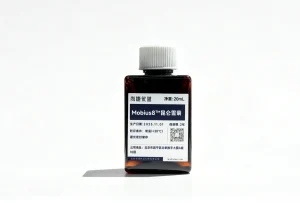
The current LANDIVINE product data identifies Mobius8™ Coreopsis Tinctoria as a new botanical extract in the anti-aging direction. It states that the ingredient is supplied as a water solution and is positioned for anti-aging serums, creams, ampoules and high-performance masks. The same data also references a China new cosmetic raw material filing dated September 3, 2025 and provides a filing number.
Those facts are useful, but their boundaries matter. A China filing is not a universal authorization for every international market, and it does not replace a brand’s own regulatory assessment for the jurisdiction where the finished cosmetic will be sold. Likewise, a product page that references clinical verification for the ingredient does not automatically establish the claim that a finished serum or cream can make after the ingredient is diluted, combined with other materials and processed in a different formulation.
The Mobius8™ Coreopsis Tinctoria product page should therefore be treated as the starting point for technical evaluation. Before approval, request the current supporting package behind the claims that are commercially important to the project and check whether the test material, test concentration, study design and measured endpoints are relevant to the intended finished product.
Separate Ingredient Evidence From Finished-Formula Claims
This distinction is one of the most important buying controls for active cosmetic ingredients. Evidence can exist at several levels: characterization of the raw material, laboratory or cell-based work, instrumental testing, ingredient-use testing and finished-formula testing. These evidence types answer different questions.
If the objective is to support an anti-aging concept, ask exactly what the available evidence demonstrates and at what level. A raw-material study may support the technical rationale for selecting the ingredient. It does not prove that every formulation containing that ingredient will reproduce the same outcome. The final formula changes concentration, exposure, vehicle, interaction with other ingredients and consumer use conditions.
For this reason, brand and OEM/ODM teams should build claims in stages. First confirm that the raw-material evidence supports the ingredient-selection rationale. Next verify that the material remains compatible and stable in the prototype. Then determine what finished-product testing is required for the actual market claim. This approach protects both technical credibility and marketing flexibility.
Formulation Compatibility Needs a Real Sample, Not a PDF Review
Documentation can eliminate obvious mismatches, but it cannot replace formulation work. The target base should be tested with a representative sample of the raw material under the same processing sequence intended for scale-up.
For a water-solution botanical, relevant observations can include appearance, odor, color shift, clarity or haze, viscosity change, emulsion behavior and visible precipitation over time. The development team should also monitor whether the ingredient changes the sensory direction of a transparent essence differently from an opaque cream. A small visual change that is acceptable in a cream may be commercially unacceptable in a clear ampoule.
Compatibility is also formulation-specific. A result in one neutral aqueous serum does not automatically transfer to a high-electrolyte gel, an acidic system or an emulsion containing a complex active package. If the brand has several planned SKUs, one sample can be screened across the priority bases before procurement commits to a broad rollout.
The purchasing implication is simple: sample approval should precede scale purchasing when formulation fit is still unknown. A technically attractive botanical that forces repeated color correction, viscosity adjustment or preservation redevelopment may create more development cost than its initial raw-material price suggests.
Ask for a Supplier Evidence Package That Answers Specific Questions
| Evidence Item | What the Buyer Should Verify | Risk if It Is Missing |
| Current technical data | Commercial identity, supplied form, application guidance and the version used for the quotation | The formulation team may evaluate an outdated or incomplete material definition |
| Ingredient identity / composition information | Declared ingredient identity and any carrier or auxiliary components relevant to the formula record | Formula documentation and compatibility review can be incomplete |
| Specification and batch evidence | Which measurable characteristics are controlled at release and how the supplied batch is represented | Batch consistency cannot be evaluated from marketing information alone |
| Claim-support evidence | Test material, concentration, study design, endpoint and whether evidence is ingredient-level or finished-formula level | Raw-material results may be overextended into unsupported finished-product claims |
| Regulatory information | What the referenced filing or regulatory status covers and what remains market-specific | A domestic filing may be mistaken for international market clearance |
| Sample and application guidance | Recommended evaluation process for the buyer’s serum, cream, ampoule or mask base | Commercial purchasing may begin before formula compatibility is demonstrated |
A useful evidence package is not the one with the largest number of files. It is the one that lets formulation, regulatory, quality and procurement teams answer their own decision questions without filling gaps by assumption. If a document exists but does not show what material was tested or what specification controls the commercial batch, the buyer should request clarification before treating it as approval evidence.
Batch Consistency Matters More as a Botanical Moves Into Scale
Botanical sourcing adds a practical quality question: how is consistency controlled when the starting material is biologically variable? Seasonal, geographic and processing differences can change natural raw materials. The supplier’s release specification is therefore important because it defines which characteristics are expected to remain within an accepted range from batch to batch.
The buyer does not need to prescribe the supplier’s analytical platform. Instead, ask which quality attributes are controlled, what appears on the certificate or batch documentation, and whether the same specification applies to the sample used during formulation work and the material supplied commercially. If a project depends on a specific sensory or analytical characteristic, it should be included in the approval discussion rather than assumed.
For brands moving from laboratory batches to pilot or commercial production, retain the approved sample information and document any later change in raw-material specification, carrier system or processing route that could affect formula performance. Change control is particularly important when the ingredient is a central part of the product story.
Regulatory Review Must Follow the Target Market
Mobius8™ Coreopsis Tinctoria is presented with a China new raw material filing in the available product data. For a China-facing project, the regulatory team should verify the current filing information and its relevance to the intended use. For export projects, the buyer should separately check ingredient naming, inventory or notification requirements, restrictions and claim rules in each target jurisdiction.
Do not convert one regulatory fact into a global statement. “Filed in China” and “cleared for use in every target market” are not the same conclusion. A distributor serving multiple markets may need a market-by-market document matrix before finalizing the commercial SKU.
The same caution applies to awards, patents or research credentials. They may support supplier background or innovation context, but they do not substitute for product-specific safety, specification, regulatory or formulation documents.
When Is Mobius8™ Coreopsis Tinctoria a Strong Shortlist Candidate?
The product is a more logical shortlist candidate when the brand is developing an anti-aging serum, cream, ampoule or mask; wants a botanical ingredient within the Chinese Plant Extraction direction; can work with a water-solution raw material; and is prepared to validate claims at the appropriate evidence level.
The decision changes when the formula cannot accommodate the supplied system, when a target market requires documentation that is not yet available, when the project depends on a specific finished-product claim that has not been substantiated, or when the brand requires a release specification that has not been agreed with the supplier. In those cases, the correct next step is not to force the ingredient into the brief. It is to resolve the technical gap or select a different raw material.
This boundary is especially important for anti-aging launches, where marketing ambition can move faster than the evidence package. Ingredient selection should follow the formula and claim strategy, not the other way around.
Build the RFQ Around the Decision, Not Around “Send Price”
A procurement-ready inquiry should state the target product format, target market, intended ingredient role, prototype stage, expected order stage and the technical documents required for evaluation. If the formula already exists, include the relevant base type and any known constraints that could affect compatibility. If the project is still at concept stage, ask for the sample and application information needed to build the first prototype.
Request a supplier response that separates confirmed product facts, documents available now, documents available on request, application recommendations and items that still require buyer input. This makes it easier for R&D and procurement to review the same information without turning the RFQ into a marketing exchange.
Once the technical brief is prepared, submit it through LANDIVINE’s project inquiry form. The most useful first discussion is not whether Mobius8 is “good for anti-aging,” but whether Mobius8™ Coreopsis Tinctoria has the right documented identity, formulation fit, evidence boundary and regulatory path for the exact anti-aging formula being developed.