Cosmetic brands should evaluate peptide formulation development as a controlled exposure problem rather than a simple ingredient-percentage decision. The formula architecture, pH, processing temperature, hold time, order of addition, surrounding actives, preservation system, packaging and storage conditions can all change what the peptide system experiences. Delivery-related positioning adds another question: whether the structure or mechanism described for the raw material remains relevant after dilution and processing in the finished formula. Development should therefore move through defined risk variables, representative prototypes, supplier evidence and decision gates before pilot scale, claim approval or commercial sourcing.
A Peptide Formula Is an Exposure History, Not a Format Label
“Suitable for serum” is not a complete development instruction. One serum may be a low-viscosity aqueous solution, another a polymer gel, and another an emulsion containing acids, antioxidants, salts and botanical extracts. Each creates a different chemical and physical environment. The same distinction applies to lotions, creams and hair-care products, where emulsifiers, surfactants or cationic conditioning agents can change the interaction landscape.
The first technical task is to describe the peptide’s likely exposure from weighing through the end of shelf life. That description includes the water phase, approximate pH, maximum temperature, time at elevated temperature, shear, addition stage, contact with other concentrated ingredients, exposure to air or light, package type and expected storage conditions. A format name alone cannot show whether the commercial material fits those conditions.
For product discovery, LANDIVINE places peptide-delivery technologies within its Supramolecular Modification category. The category indicates a technology direction, but it does not replace product-specific formulation guidance or finished-formula testing.
Define the Operating Window Before Building the Prototype
pH Must Be Considered With the Entire Active System
Peptide stability can depend on sequence and environment, so a pH value borrowed from another ingredient is not a reliable development rule. The finished product may already have a required pH because of its preservative system, exfoliating acids, antioxidants, polymers or sensory target. The relevant question is whether the selected peptide system has adequate compatibility or stability support across that intended range, including realistic manufacturing and storage drift.
Changing pH to accommodate one ingredient can create a new problem elsewhere. Polymer viscosity may shift, preservation may need to be reassessed, another active may become less compatible, or visual clarity may change. The decision is therefore not “find one universally ideal pH for peptides” in isolation. It is to identify an operating range that the complete formula can support and then verify the peptide material within it.
Temperature, Time and Addition Stage Act Together
Maximum vessel temperature is only one part of process exposure. A peptide-containing material added before a long heated hold experiences a different history from the same material added during cool-down. Mixing time after addition, recirculation, local concentration during dosing and the delay before filling can also matter. A supplier recommendation such as “add during cool-down” is useful only when the team understands the condition it is intended to protect.
Laboratory records should capture actual addition temperature, hold time, order of addition and mixing conditions. Pilot work should reproduce the intended sequence closely enough to reveal scale-related differences. When the acceptable process window is not documented, ask the supplier which conditions have been evaluated and which remain outside available evidence rather than converting one laboratory example into a universal manufacturing limit.
Oxygen, Light and Packaging Extend the Exposure Window
Processing ends after filling, but exposure continues through storage and consumer use. Headspace, repeated package opening, light transmission and temperature excursions may become relevant depending on the peptide, delivery system and surrounding formula. The package should therefore be part of the stability question, not selected only after the bulk formula looks acceptable.
A representative package test helps determine whether a formula that is acceptable in a closed laboratory container remains acceptable under the intended storage and use pattern. The required conditions and analytical methods should come from the brand’s quality system, target market and product risk assessment; they should not be invented from a generic peptide article.
The Surrounding Formula Can Change an Otherwise Acceptable Material
Compatibility is not limited to visible precipitation. Surfactants can change solvation and interfacial behavior. Electrolytes can alter ionic conditions and polymer rheology. Preservatives, acids, antioxidants and metal-containing ingredients may change the chemical environment. Thickening polymers can affect mixing, diffusion and the way a structured ingredient disperses through the batch. The importance of each variable depends on the actual composition.
This creates a common development trap: a material performs well in water or a simple neutral gel, then behaves differently in the complete active package. The simplified test confirms only that the ingredient can enter that simplified vehicle. It does not answer whether the final combination remains physically stable, chemically acceptable and suitable for the intended claim.
Screening should therefore progress from the intended base to the complete active system rather than in the opposite direction. Record not only appearance but also pH, viscosity, phase behavior, odor, color and any visible sediment or haze. Where the project requires chemical or delivery-related confirmation, define the relevant analytical or performance evidence separately. Visual acceptance cannot substitute for those measurements.
Evaluate a Delivery System After It Enters the Finished Formula
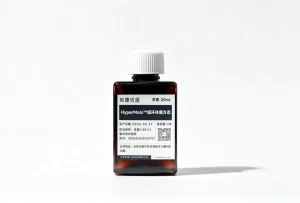
The available product data describes HyperMolx™ Super-Ring Peptide Matrix as a water-solution supramolecular cosmetic ingredient suitable for aqueous products, gels, essences, lotions, creams and hair-care products. It presents the system around four active peptides, manganese-ion coordination and supramolecular host-guest assembly, with a protective sustained-release concept intended to address peptide degradation and targeting challenges.
Those statements establish a technical direction. They do not confirm the finished formula’s delivery performance, exact use level, acceptable pH range, addition temperature, incompatibility list or shelf life. Dilution, shear, solvent changes, surfactants, ionic conditions, preservation and heat can change the environment in which a structured system is expected to operate. The exact sensitivity of the commercial material must come from product-specific evidence.
Use the HyperMolx™ Super-Ring Peptide Matrix product page to begin that evaluation. Then ask what the available studies actually tested: raw material or finished formula, test concentration, vehicle, process history, storage condition, measured endpoint and acceptance basis. A delivery-related statement is credible only when the evidence level matches the statement being made.
This distinction affects claim strategy. Ingredient-level data may support the rationale for selecting the material or accurately describe the ingredient technology. A finished serum or cream claim may require evidence on the commercial formula at its intended use conditions. The product name or technology label does not bridge that evidence gap by itself.
Use a Development Matrix to Connect Variables With Decisions
| Development Variable | What It Can Change | Evidence to Collect | Decision Supported |
| Formula pH and expected drift | Peptide chemical environment, solubility, polymer behavior and compatibility with other actives | Product-specific guidance plus prototypes across the intended operating range | Keep the base, adjust the pH strategy or select another peptide system |
| Addition temperature, hold time and sequence | Total heat exposure, dispersion and the integrity of a structured delivery system | Recorded laboratory process, supplier guidance and a comparable pilot process | Define the addition stage and acceptable manufacturing window |
| Surfactants, electrolytes, polymers and co-actives | Ionic conditions, solvation, rheology, phase behavior and ingredient interactions | Fresh and aged prototypes containing the complete active and preservation package | Retain, resequence, reformulate or remove a conflicting component |
| Preservation system | The surrounding chemical environment and the formula’s overall stability strategy | Finished preserved formula evaluated under the brand’s defined test plan | Confirm compatibility or revise the preservation approach |
| Package, oxygen, light and storage | Exposure after filling and the relevance of bulk-container observations | Prototype in the intended or justified representative package | Confirm the package or expand the stability program |
| Delivery or performance claim | The evidence level required and the wording that can be supported | Study details showing test material, vehicle, concentration, process and endpoint | Use an ingredient-level statement, perform finished-formula testing or remove the claim |
| Scale-up process | Mixing intensity, heat transfer, addition duration, aeration and batch uniformity | Pilot comparison against the approved laboratory reference | Approve the process, revise it or repeat the pilot |
The matrix separates questions that are often collapsed into one “stability test.” A prototype can pass visual inspection while the delivery evidence remains irrelevant to the finished formula. It can also pass at laboratory scale yet fail to reproduce after addition time, heat transfer or mixing changes in a larger vessel. Each row therefore needs its own acceptance criteria and evidence owner.
The central decision chain is: formula and process conditions define exposure; exposure can change peptide or delivery-system behavior; the change creates stability, scale-up or claim risk; product-specific documentation and representative prototypes reveal whether the risk is controlled; the team then advances, adjusts or rejects the system. This chain is more useful than treating peptide concentration as the only development variable.
A Clear Prototype Can Still Contain an Unresolved Risk
Physical compatibility is the first layer, not the final conclusion. A clear, homogeneous sample may still lack evidence that the peptide remains chemically acceptable or that the intended delivery-related property is retained. Conversely, a modest color or viscosity change may come from the botanical package, polymer network or preservative interaction rather than the peptide material itself.
Separate the review into five questions:
- Physical compatibility: Does the formula remain within its appearance, clarity, viscosity, phase and dispensing criteria?
- Chemical environment: Are pH, oxidation exposure and reactive co-ingredients within a range supported by evidence or testing?
- Process compatibility: Can the addition point, heat history and mixing sequence be reproduced without creating an unacceptable change?
- Package compatibility: Does the selected package maintain the relevant quality attributes during the intended storage and use pattern?
- Performance compatibility: Does the evidence support the technical or marketing statement planned for the finished product?
The priority changes with the format. A transparent essence places strict emphasis on clarity and color. A hot-process emulsion creates a different heat history from a cold-process gel. A rinse-off hair product has a different use pattern and claim context from a leave-on facial serum. One universal peptide-development protocol would hide these differences.
Scale-Up Changes Exposure Even When the Formula Is Unchanged
A laboratory and pilot batch can use the same ingredient percentages while producing different exposure histories. Larger equipment may heat and cool more slowly. Addition may take longer. Mixing zones, recirculation, pumping and deaeration may change local concentration or shear. A material added quickly to a small beaker may enter a production vessel over a much longer period.
For this reason, the laboratory process record must be detailed enough to serve as a reference. Record ingredient lot, formula version, vessel temperature at addition, addition duration, mixing method, hold time, pH adjustment sequence, package and initial observations. During pilot work, document deviations rather than treating the batch as equivalent because the formula sheet is unchanged.
Pilot approval should compare the scaled batch with the accepted laboratory reference using the attributes that matter to the project. When a difference appears, the team can then investigate process history separately from raw-material variation. Without that separation, a scale-up problem may be incorrectly assigned to the ingredient, or an ingredient change may be hidden inside a process adjustment.
Raw-Material Evidence and Finished-Formula Evidence Serve Different Purposes
Raw-material technical data defines the commercial ingredient, its stated application scope, storage guidance and release controls. Raw-material stability information, when available, addresses the ingredient under the supplier’s defined conditions. Neither establishes the shelf life of a new finished formula.
Finished-formula development records answer a different set of questions: how the ingredient behaves after dilution, contact with other actives, pH adjustment, preservation, processing, packaging and storage. Keeping the records separate improves root-cause analysis and prevents one evidence type from being used outside its scope.
Before scale-up, ask the supplier which current documents and samples are available. Review not only the document title but the test conditions and decision it supports. A delivery study conducted in a model vehicle may be useful for understanding the ingredient concept but weak for a complex emulsion. An application example may show one workable process without defining the full operating window. A batch certificate may confirm release attributes without proving finished-formula compatibility.
Brands that do not yet have a stable base may need a separate formula development scope. That discussion should define the prototype output, technical responsibilities, test requirements and evidence expected from the service, rather than assuming ingredient purchase automatically includes finished-formula development.
Know Where the Recommendation Changes
This evaluation path is most relevant when peptide stability or delivery is central to a cosmetic product concept and the ingredient must enter a custom base. The decision changes when the supplier provides a prevalidated finished-base system, because some formulation variables may already be controlled within that specific system. It also changes when the product is rinse-off, when contact time and claim direction differ from a leave-on product.
A target jurisdiction can alter the evidence and wording required for a claim even when the formula is technically acceptable. Package design, consumer use pattern and shelf-life target can also change the stability plan. Where the proposed pH, process temperature, surfactant environment or other conditions fall outside the supplier’s supported range, the correct response is not to force compatibility. The team should adjust the base, obtain new evidence or select another technical route.
The same caution applies when the planned claim is more specific than the available evidence. Narrowing the wording may be appropriate when ingredient-level data is sound but finished-formula substantiation is unavailable. Continuing with a stronger claim requires a test plan that actually addresses the commercial formula and target market.
Turn the Development Brief Into a Testable Statement
A useful brief allows the supplier and the brand to discuss the same technical problem. It should not consist only of an ingredient name and a request for price. Include the information that determines exposure, evidence relevance and sample approval:
- Product format and formula architecture: identify whether the project is an aqueous solution, gel, emulsion or hair-care system and describe the major structural components.
- Operating conditions: give the approximate pH, temperature profile, hold time, addition stage, mixing approach and any conditions already fixed by other actives.
- Co-ingredients: identify acids, antioxidants, surfactants, electrolytes, polymers, preservatives and other concentrated actives that may affect compatibility.
- Package and storage plan: state the intended package type, expected storage conditions and any relevant light or oxygen exposure.
- Claim and evidence requirement: distinguish the ingredient story from the finished-product statement and define what evidence is needed before approval.
- Prototype and scale stage: state whether the project needs an initial sample, compatibility review, pilot support or confirmation for commercial procurement.
- Acceptance criteria: define the physical, chemical, process or performance attributes that will determine advance, adjustment or rejection.
Ask the supplier response to separate confirmed product facts, recommended conditions, evidence available now, information available on request, untested conditions and items that still depend on the buyer’s formula. Once those boundaries are clear, submit the brief through LANDIVINE’s project inquiry form. The next step is a controlled technical decision: verify whether HyperMolx™ Super-Ring Peptide Matrix fits the intended formula and process, define the evidence still required, and approve scale-up only after the relevant risks have been tested.