Direct Answer: Neither freshwater nor marine algae is automatically the better cosmetic ingredient source. Buyers should compare the identified organism, harvested material, processing route, composition, carrier, specification, stability and supporting evidence. Marine origin may offer a distinctive development story, but project fit depends on the supplied ingredient and finished formula—not on the word “marine” alone.
The difference between freshwater and marine algae begins with the environment in which the organism grows, but procurement decisions cannot stop there. Two algae from the same environment may produce very different materials. The same organism can also yield different ingredient profiles when cultivation, harvest timing, extraction, fermentation, separation or preservation changes.
For a cosmetic R&D team, “freshwater algae” and “marine algae” are therefore useful sourcing categories, not performance specifications. A disciplined comparison moves from biological identity to the commercial ingredient that will actually enter the formula. LANDIVINE’s marine algae ingredient portfolio provides one side of that sourcing route, while each project still requires product-level review.
What the source environment can—and cannot—tell buyers
Freshwater algae grow in low-salinity aquatic systems; marine algae grow in seawater or saline environments. That distinction influences cultivation conditions and the controls used to manage the biomass. It can also shape the organism’s chemistry. However, the environment does not establish a universal list of actives, a standard concentration or a guaranteed cosmetic effect.
Buyers should avoid three shortcuts. First, green color does not prove freshwater origin, and red or brown color does not by itself prove a specific marine species. Second, “deep sea” or “extreme environment” language is not a substitute for identity and specification. Third, algae source is not the same thing as ingredient format: a dried biomass, aqueous extract, polysaccharide fraction and ferment are materially different inputs even if they begin with the same organism.
This distinction prevents an easy category mistake. A comparison of source waters is not yet a comparison of two purchasable cosmetic materials.
Compare eight product-level variables
| Decision variable | Freshwater algae ingredient | Marine algae ingredient | What the buyer should request |
| Identity | Organism and supplied material must be identified | Organism and supplied material must be identified | Accepted name, relevant INCI and traceable product identity |
| Growth medium | Low-salinity cultivation or harvest conditions | Seawater or saline cultivation or harvest conditions | Source and cultivation controls relevant to the lot |
| Processing | May be biomass, extract, fraction or ferment | May be biomass, extract, fraction or ferment | Process outline and the step that creates the commercial ingredient |
| Composition | Depends on organism, growth and processing | Depends on organism, growth and processing | Marker, solids or other meaningful specification parameters |
| Carrier | Water, glycerin or another delivery medium may be present | Water, glycerin or another delivery medium may be present | Full supplied form, preservative system and handling needs |
| Formulation behavior | Color, odor, salts and polymers can affect the base | Color, odor, salts and polymers can affect the base | pH range, solubility, addition stage and compatibility guidance |
| Evidence | Must match the exact ingredient and intended use | Must match the exact ingredient and intended use | Test material, method, concentration and claim relevance |
| Supply control | Cultivation and processing consistency must be managed | Cultivation and processing consistency must be managed | Specification, change notification and lot-release documents |
The table is deliberately symmetrical. It resists the assumption that one habitat creates better documentation or easier formulation. Those qualities belong to a defined commercial material and its supplier controls.
Identity comes before the marketing name
A buyer should be able to connect four names: the organism, the harvested or cultured material, the cosmetic ingredient’s INCI, and the supplier’s trade name. They may not be identical. This matters when a product includes a fermentation partner, mineral component, solvent or preservative that is not obvious from the algae story.
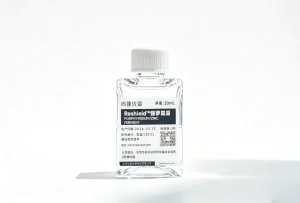
Reshield™ illustrates that point. The Reshield™ Porphyridium Zinc Ferment product page identifies the raw material as a marine algae product with the INCI “Porphyridium / Zinc Ferment.” It is not simply dried red algae or a generic algae extract. The supplier describes screening, high-density cultivation, separation and purification steps, so a buyer evaluating it should assess the resulting ferment and its specification rather than infer performance from Porphyridium alone.
Identity review also protects the regulatory file. A common name used in marketing may not be the name needed for an ingredient list or market assessment. Procurement, formulation and regulatory teams should work from the same controlled product documentation.
Processing can matter more than habitat
Processing determines what leaves the biomass and what reaches the formula. Water extraction can favor a different profile from solvent extraction. Fermentation may transform substrates or create metabolites. Separation and purification influence solids, color, odor and batch consistency. The choice of carrier affects handling and the apparent use concentration.
Five practical questions reveal more than a broad source claim:
- What is the supplied physical form, and what else is present in the carrier?
- Which parameter is controlled to keep lots comparable?
- What range of color, odor, pH or solids should the receiving team expect?
- At what stage and temperature should the ingredient be added?
- Which formulation conditions are known to change its appearance or performance?
Natural materials often have a realistic specification range rather than a single visual standard. A buyer should understand which variation is cosmetic and which signals a process or storage issue. A strict color target may increase processing without improving project performance; an undefined color range, on the other hand, can create finished-product inconsistency.
Formulation fit is a system question
Algae ingredients can bring dissolved salts, polysaccharides, proteins, pigments, odor and preservation demands into a base. The effect depends on the supplied product. Electrolytes may alter some thickener systems. Natural color can shift with pH or oxidation. A polymer-rich material may change slip, stringiness or spray behavior. A water-based ingredient also contributes to the formula’s overall preservation challenge.
Reshield™ is described as a water solution suitable for creams, lotions, essences, aqueous products and masks. That is useful application guidance, but it does not remove the need for a bench compatibility check in the buyer’s exact base. The target use level, final pH, thickener, surfactants, fragrance and package can all affect the result.
Application intent helps narrow the portfolio. A team developing a barrier-support concept may begin with the marine algae repair category; a rinse-off or leave-on scalp brief may instead use the marine algae scalp-care category. Category fit is only the first screen. Product documentation and formula trials determine whether the chosen material belongs in the final system.
Read evidence at the same level as the purchasing decision
Evidence should answer a specific question: identity, composition, mechanism, ingredient activity, formula performance or consumer outcome. These are not interchangeable. An in-vitro result on an ingredient does not establish the same result in every finished product. A supplier prototype can demonstrate formulation feasibility without proving a market claim. A consumer test is meaningful only when its design, population, product and endpoint match the intended statement.
For every study, buyers should note the tested material, concentration, control, method and conclusion. If the tested material differs from the purchased grade or the proposed use level, the gap should be discussed rather than hidden by a broad headline. LANDIVINE’s R&D institute model links raw-material work, formula design and efficacy testing; project teams should use that link to define which evidence belongs at each stage.
Representative Scenario — Not a Claimed Customer Case
A hair-care brand is selecting an algae ingredient for a lightweight leave-on scalp essence. One candidate is a freshwater algae extract in a glycerin-water carrier. The other is a marine Porphyridium-based zinc ferment supplied as a water solution. The brand initially prefers the marine option because the story feels more distinctive.
The R&D team pauses the source-led decision and compares both product dossiers. It confirms identity and carrier, reviews color and odor ranges, asks for pH and handling guidance, and screens each material in the actual polymer-thickened base. It also maps the available evidence to the intended scalp-comfort language. The selected ingredient is the one that meets the formula, documentation and claim requirements together—not simply the one with the more attractive habitat story.
A practical procurement decision path
- Define the application: format, target consumer, pack, sensory limits and claim territory.
- Confirm product identity: organism, INCI, trade name, processing route and complete supplied form.
- Compare specifications: meaningful markers, physical ranges, microbiological limits, storage and shelf-life documentation.
- Screen formulation risk: pH, electrolytes, thickener response, color, odor, preservation and packaging.
- Map the evidence: separate ingredient rationale from finished-formula substantiation.
- Review supply control: lot consistency, traceability, change notification and agreed acceptance tests.
- Run a controlled trial: test in the intended base and compare against written criteria.
This sequence keeps the environmental origin in its proper place: important context, but only one input to selection. Buyers who need product documents or an application discussion can use the LANDIVINE contact page to request information for the exact grade and intended formula.
Frequently Asked Questions
Are marine algae ingredients more effective than freshwater algae ingredients?
Not as a general rule. Performance depends on the organism, ingredient format, processing, specification, use level, formula and evidence. Source environment alone cannot establish superiority.
Is Porphyridium a freshwater or marine algae source?
Porphyridium is commonly associated with marine or saline environments. For procurement, buyers should still rely on the supplier’s identified commercial ingredient, INCI, process and specification rather than the organism name alone.
What documents should buyers request for an algae ingredient?
Requirements vary by market and project, but buyers commonly review the product specification, certificate of analysis format, safety documentation, INCI information, composition or carrier details, storage guidance, shelf life, traceability and relevant efficacy or application data.
Why does the carrier matter?
The carrier changes handling, preservation, formulation input and the interpretation of use level. Two products with similar algae stories may deliver very different amounts and types of material because their supplied forms differ.
Can supplier ingredient data support a finished-product claim?
It can support the rationale, but it may not be sufficient by itself. The buyer should check whether the tested ingredient, concentration, formula context, method and endpoint align with the intended finished-product statement.
What should be tested first in a water-based algae ingredient?
Begin with identity and document review, then screen the exact formula for appearance, odor, pH, viscosity response, solubility or dispersion, preservation implications and stability. The order should reflect the project’s main failure risks.
Is algae color a reliable way to classify the ingredient?
No. Appearance can be influenced by organism, concentration, extraction, fermentation, purification, carrier, pH and storage. Color is a useful specification attribute, not a complete identity method.