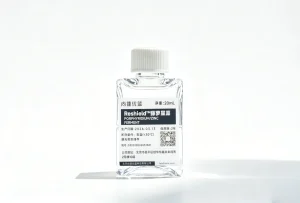
A marine algae cream project should begin with the exact cosmetic ingredient, not with a consumer-facing algae name. Search phrases such as “100 red marine algae cream” can signal interest in a strongly algae-positioned skincare concept, but they do not identify an INCI, supplied form, addition level or finished-product performance. For formulation teams, the practical workflow is to confirm the ingredient identity, physical form, compatibility with the chosen cream system, available supplier documentation and the evidence needed for the finished formula. LANDIVINE’s Marine Algae portfolio includes Reshield™ Porphyridium Zinc Ferment, a water-solution raw material with INCI Porphyridium / Zinc Ferment that is listed for creams, lotions, essences, aqueous products and masks.
A Marine Algae Cream Starts With Ingredient Identity
The phrase marine algae cream sounds specific from a marketing perspective, yet it remains incomplete for laboratory work. “Marine algae” describes a source direction. It does not tell a formulator which organism-derived material is being purchased, how it was processed, what INCI should appear in the formulation records or how the supplied material behaves inside an emulsion.
A cosmetic R&D team should translate the concept into verifiable fields:
- trade name of the supplied raw material;
- exact INCI;
- source or category information provided by the supplier;
- supplied physical form;
- recommended application formats that are actually documented;
- technical documents available for formula review.
This distinction also protects the project from a common SEO-to-R&D error. A search for “red marine algae cream” should not be converted directly into a formula claim or a percentage assumption. The word “100” in a search phrase does not prove 100% algae content, a 100% active level or any other quantitative specification.
For product discovery, formulators can first review LANDIVINE’s Marine Algae ingredient category and then move to the exact product page before building the formula brief.
Why Supplied Form Matters Before Emulsion Design
Reshield™ Porphyridium Zinc Ferment is documented as a water solution. That fact is more useful to a formulator than a broad “marine algae” label because it begins to define how the material enters the formulation discussion.
A water-based supplied form usually means the team needs to evaluate it in the context of the aqueous environment of the formula. But “water solution” does not mean “compatible with every cream.” A finished emulsion contains interacting components: emulsifiers, thickeners, preservatives, other actives, salts, humectants, oils and processing steps. A new raw material can change one or more of those relationships.
The practical chain is:
supplied form → phase environment → formula interactions → prototype behavior → finished-product verification.
This is why marine algae ingredient for cream is a formulation-compatibility question, not only an ingredient-selection question.
“Suitable for Creams” Is a Starting Point, Not a Finished Formula
The Reshield™ product information identifies creams among its applicable dosage forms. That is useful evidence that a cream project is within the documented application scope. It does not prove that every emulsion base, processing sequence or active combination will behave the same way.
Consider how different cream concepts can change the environment around the same raw material:
- a light emulsion with low sensory weight;
- a richer cream with a larger oil phase;
- a gel-cream with a polymer-dependent structure;
- a multi-active formula containing several functional ingredients;
- a cream designed around a specific preservation or packaging strategy.
The ingredient identity has not changed, but the formulation context has. That context should be tested rather than inferred.
What Should R&D Teams Check During Prototype Development?
A useful prototype program looks for changes caused by the complete formula, not only whether the raw material can physically be mixed into the batch.
Appearance and physical uniformity
Check whether the prototype remains visually uniform after the ingredient is incorporated. Unexpected precipitation, separation, agglomeration, color shift or other visible changes may indicate that the formula needs further adjustment or investigation.
Viscosity and structure
An active introduced into an emulsion can interact with the system that creates the product’s structure. If the viscosity or feel changes meaningfully, the team needs to identify whether the cause is the ingredient itself, its carrier, the order of addition or an interaction with another formula component.
Processing sequence
The product page does not provide a universal process temperature or mandatory addition stage for every formula. Those conditions should therefore be confirmed through supplier guidance where available and through formulation trials. Do not invent a temperature limit simply because an ingredient is supplied in water.
Storage and finished-formula stability
Raw-material stability and finished-product stability are separate questions. A stable ingredient can still participate in an unstable finished emulsion if the overall system is poorly matched. The brand’s normal finished-product stability program should therefore evaluate the complete prototype in its intended packaging.
Marine Algae Skincare Formulation Requires Evidence at More Than One Level
A strong marine algae skincare formulation separates evidence into layers. This is particularly important when the ingredient has an interesting biological or functional story.
At the raw-material level, a supplier may provide information about the ingredient identity, manufacturing approach, mechanism-related research or raw-material testing. At the formula level, the R&D team must verify whether the ingredient can be incorporated into the target base. At the finished-product level, the brand needs evidence relevant to the claims it ultimately intends to make.
Those layers should not be collapsed into one another:
raw-material evidence ≠ prototype compatibility ≠ finished-product claim evidence.
For example, ingredient-level information associated with soothing or barrier-related research does not automatically mean that any cream containing the material has demonstrated the same finished-product outcome. Formula composition, use level, packaging, stability and final testing all influence what can responsibly be claimed.
What Should Formulators Verify for a Porphyridium Cosmetic Ingredient?
Reshield™ provides a useful product-level example because its documented information gives several concrete starting points without requiring the formulator to guess.
| Verification Item | What the Current Product Evidence Supports | What Still Requires Formula-Level Review |
| Trade name | Reshield™ Porphyridium Zinc Ferment | Whether it fits the project concept |
| Category | Marine Algae | How the category is translated into the brand story |
| INCI | Porphyridium / Zinc Ferment | Target-market ingredient and claim review |
| Supplied form | Water solution | Compatibility with the chosen emulsion system |
| Application formats | Creams, lotions, essences, aqueous products, masks and other dosage forms | Specific base, process and packaging behavior |
| Finished performance | Not established merely by the application listing | Prototype, stability and finished-product evidence |
The difference between the middle and right columns is important. A product page can establish what the supplier currently documents; the formulation team still owns the decision about whether the ingredient works in the intended formula and whether the finished product supports the planned positioning.
Teams evaluating this material can review the Reshield™ Porphyridium Zinc Ferment product page after defining the cream architecture they want to test.
How Do Other Actives Change the Decision?
Modern creams often contain multiple actives rather than one hero ingredient. That makes compatibility more important, not less.
If a formula already contains botanical extracts, fermented materials, humectants, polymers or other functional ingredients, adding a marine algae active changes the total system. The team should check whether the new material affects appearance, viscosity, preservation strategy or sensory target. The relevant interaction may come from the active, the carrier or the combined ionic/chemical environment.
A good development brief therefore identifies the other major actives before the supplier recommends a formulation path. “We want a marine algae cream” is less actionable than “we are developing a light leave-on cream with these existing actives, this sensory target and this packaging format.”
What Documents Should a Cosmetic R&D Team Request?
Documentation should answer specific development questions rather than simply make the project file thicker.
- Product specification: confirms the commercial raw material being evaluated.
- INCI information: confirms ingredient identity for formula records and downstream review.
- Technical or formulation guidance: provides supplier-supported handling or application information where available.
- Available evidence package: helps the brand distinguish raw-material findings from claims that still require finished-product substantiation.
- Storage and handling information: supports raw-material control before batching.
- Regulatory information: should be reviewed for the specific destination market rather than assumed globally.
LANDIVINE’s public positioning combines raw-material development with formula-development support, but the exact documents and project scope should be confirmed for the selected material rather than assumed from the company-level service description.
Build the Cream Brief Around Decisions the Lab Can Test
A useful development brief for a cream formulation with algae ingredients should state the finished-product format, desired texture, main co-actives, target market, packaging concept and evidence expectations. If the brand has a claim direction, it should identify which claims require finished-formula testing instead of copying raw-material language into the marketing brief.
After the ingredient is selected, the next step is to connect product evidence with prototype work. LANDIVINE’s Formula Development section provides the relevant service context. A project team can then use the contact page to request product-specific technical information and discuss the formulation brief.
The best outcome is not simply a cream that “contains marine algae.” It is a formulation in which the ingredient identity is clear, the supplied form is understood, the prototype remains technically workable and the finished-product evidence is appropriate for the intended claim.