Direct Answer: Beach plants are terrestrial vascular plants adapted to coastal sand, salt spray, wind and limited freshwater, while marine algae are aquatic photosynthetic organisms that live in seawater and generally lack true roots, stems, leaves and vascular tissue. The distinction affects how they obtain nutrients, manage salt, capture light and—important for cosmetic R&D—how their raw materials should be identified, processed and evaluated.
For cosmetic brands, OEM/ODM formulators and ingredient procurement teams, “marine plant” is too broad to be a reliable sourcing category. A dune plant extract, a seagrass-derived material and a marine alga can all appear in a marine-inspired concept, yet they belong to different biological groups and may require different source verification, processing controls and formulation evidence. LANDIVINE’s portfolio includes a dedicated Marine Algae ingredient category, while its broader botanical work sits within separate plant-extraction directions.
What Counts as a Beach Plant?
Beach plants are land plants that grow in coastal habitats such as dunes, upper beaches, saline flats or other shore environments. Most are vascular plants with true roots, stems and leaves. Their root systems anchor them in unstable soil or sand and absorb water and mineral nutrients from the substrate.
Coastal plants face a particular combination of stresses: salt spray, occasional saline flooding, strong wind, high light, shifting sand and limited freshwater. Different species solve these problems differently. Some develop thick or waxy leaves, succulent tissues, deep or spreading roots, compact growth forms or specialized salt-management strategies.
Industry experience point: A coastal habitat does not automatically make a botanical ingredient “marine.” Procurement should confirm the actual source species and harvested plant part before using a marine-origin story in a technical dossier.
What Counts as Marine Algae?
Marine algae are photosynthetic organisms adapted to living in seawater or brackish environments. They range from microscopic single-celled forms to large seaweeds. Many macroalgae have a thallus rather than true roots, stems and leaves, and some use a holdfast mainly for attachment to rock or other surfaces.
Because the algal body is surrounded by water, dissolved nutrients and inorganic carbon can be exchanged across much of the cell or thallus surface. Marine algae therefore do not use the root-to-leaf transport system typical of vascular plants.
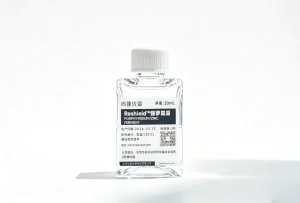
LANDIVINE currently lists Reshield™ Porphyridium Zinc Ferment as a marine-algae cosmetic ingredient. The product database identifies it as a water-solution ingredient suitable for multiple cosmetic dosage forms. That product-specific information is more useful for formulation decisions than a generic phrase such as “sea plant extract.”
How Are Their Structures Different?
| Feature | Beach Plants | Marine Algae | Why It Matters for Ingredient Buyers |
| Basic body plan | Usually roots, stems and leaves | Cells, filaments or thallus forms; usually no true roots, stems or leaves | Harvested raw material and extractable fractions may differ substantially. |
| Vascular tissue | Present in typical beach plants | Generally absent | Internal transport and tissue specialization are biologically different. |
| Attachment | Roots anchor and absorb water/minerals | Some macroalgae use holdfasts mainly for attachment | A holdfast should not be described as a functional root equivalent. |
| Environmental medium | Main body exposed to air | Body surrounded by seawater for much or all of the life cycle | Surface chemistry, salt exposure and processing history may differ. |
| Nutrient acquisition | Mainly through roots from soil or sediment | Largely through direct exchange with surrounding water | Source ecology should not be simplified into one generic “mineral-rich” claim. |
How Do Beach Plants Manage Salt and Water Stress?
Beach plants must avoid losing too much freshwater while tolerating salt around their tissues or root zone. Depending on species, they may exclude some salts at the root, compartmentalize ions, excrete salts, store water in succulent tissues or reduce evaporative loss through leaf structure.
These strategies are adaptations of the living plant. They do not prove that an extract made from the plant will automatically deliver a corresponding cosmetic effect. Extraction solvent, plant part, standardization, purification and final formula all affect what reaches the finished product.
Industry experience point: Marketing language often moves from “the plant survives salt stress” to “the ingredient protects skin from stress.” That step requires product-specific evidence, not habitat storytelling alone.
How Do Marine Algae Manage Life in Seawater?
Marine algae are continuously exposed to a saline aquatic environment. Their cells must maintain osmotic balance, nutrient exchange and photosynthesis while dealing with changing light, temperature, water movement and, for intertidal species, periodic air exposure.
Unlike beach plants, they do not need roots to transport freshwater into a canopy. Their cells interact directly with seawater, which means surface area, thallus thickness and water movement can strongly influence gas and nutrient exchange.
Industry experience point: “Marine mineral exposure” and “finished ingredient mineral composition” are not the same thing. Washing, cultivation, fermentation, extraction and purification can substantially change the final material.
How Is Photosynthesis Different Between Beach Plants and Marine Algae?
Both capture light energy, but the optical environment is different. Beach plants receive light through air, where leaves must balance light capture against heat and water loss. Marine algae receive light after it has passed through water, where intensity decreases with depth and some wavelengths are absorbed more rapidly than others.
Marine algal groups can also use different accessory pigments in addition to chlorophyll. These pigments help explain why many algae appear green, brown or red and why different groups can occupy different light environments.
This biological difference is useful for R&D context, but pigment adaptation should not be translated directly into a cosmetic performance claim without ingredient-specific characterization and formula-level evidence.
Are Seagrasses Beach Plants or Marine Algae?
Neither category is quite correct. Seagrasses are flowering plants that evolved from terrestrial ancestors and returned to marine habitats. They have true roots, vascular tissue, flowers and seeds, so they are plants rather than algae.
This is important in ingredient sourcing because common-language labels such as seaweed, seagrass, marine botanical and sea plant are not interchangeable taxonomic terms.
Industry experience point: Always request the scientific source identity when the supplier’s marketing name is broad. Common names are useful for storytelling but weak for technical qualification.
What Does the Difference Mean for Cosmetic Ingredient Sourcing?
| Buyer Check | Beach/Coastal Plant Ingredient | Marine Algae Ingredient |
| Source identity | Botanical name and plant part | Algal organism identity and biomass/raw-material form |
| Process | Extraction, purification, fermentation or other processing | Cultivation/harvest plus extraction, fermentation or other processing |
| Formulation behavior | Solubility, color, odor, pH and compatibility | Same checks plus marine-source processing and composition considerations |
| Evidence | Ingredient-specific specification and supporting tests | Ingredient-specific specification and supporting tests |
| Claims | Separate plant ecology from cosmetic efficacy | Separate algal adaptation from cosmetic efficacy |
| Regulatory review | Verify the actual ingredient and target market | Verify the actual ingredient and target market |
For brands screening both terrestrial botanicals and marine materials, LANDIVINE’s Chinese Plant Extraction and Marine Algae categories should be treated as separate sourcing families. The correct comparison is the actual ingredient versus the formula requirement—not “land plant versus sea plant” as a marketing shortcut.
Scenario: A Brand Brief Mixes Beach Botanicals and Marine Algae Into One Category
Scenario: A representative cosmetic sourcing scenario, not a claimed LANDIVINE customer case.
Business Background: A skincare brand asks an OEM/ODM team to create a “coastal resilience” serum. The concept brief lists dune plants, seaweed and microalgae together as marine botanicals.
Problem: Procurement begins comparing price and marketing story before confirming whether the ingredients are terrestrial plant extracts, marine algae materials or other marine-derived sources.
Cause: The sourcing brief uses habitat language rather than biological identity, product format and formulation function.
Solution: The team separates coastal vascular plants from marine algae, then requests source identity, manufacturing route, product specification, formula compatibility data, safety/regulatory documentation and evidence relevant to the intended claim before sample screening.
Buyer Decision Value: The brand keeps the coastal concept but removes a major source of technical ambiguity before formulation and commercial purchasing.
What Should Buyers Verify Before Moving From Sample to Bulk?
A lab sample can prove that an ingredient is interesting in a formula, but it does not by itself prove that the raw-material specification and procurement package are ready for scale-up. Buyers should align product identity, supply form, specification, batch acceptance criteria, required documents, formula dosage, target market and any claim-supporting evidence before bulk release.
LANDIVINE’s Formula Development category is relevant when the ingredient choice must be evaluated inside a finished dosage form rather than as an isolated raw material.
Industry experience point: The strongest marine-origin story still fails commercially if the ingredient creates color, odor, solubility or stability problems in the actual formula.
Frequently Asked Questions
Are beach plants marine organisms?
Usually no. Beach plants are terrestrial plants growing in coastal habitats. They may tolerate salt spray or saline soil but are biologically different from marine algae.
Are marine algae true plants?
Not in the same sense as vascular land plants. “Algae” covers several photosynthetic lineages, many of which lack true roots, stems, leaves and vascular tissue.
Is seaweed the same as marine algae?
Seaweed is a common term for larger macroalgae. Marine algae also include microscopic forms that are not normally called seaweed.
Are seagrasses algae?
No. Seagrasses are flowering vascular plants adapted to marine habitats.
Do marine algae absorb nutrients through roots?
Generally no. Many algae exchange dissolved nutrients directly across their cells or thallus surfaces; holdfasts mainly provide attachment.
Does coastal or marine adaptation prove a cosmetic benefit?
No. Ecological adaptation explains the living organism. Cosmetic performance must be supported by data for the processed ingredient and, where relevant, the final formulation.
What should buyers send LANDIVINE for a marine ingredient review?
Send the target dosage form, ingredient role, claim direction, target market, formula constraints, required documentation, sample plan and project stage.
Request an Ingredient Source and Formula Review
For a coastal botanical or marine-algae project, send LANDIVINE the intended formula type, target claim, source preference, compatibility constraints, market, required documentation, sample needs and development stage through the Contact Us page. LANDIVINE can review the available ingredient directions and help separate biological-source questions from formula-performance requirements before commercial selection.